If you’ve spent any time in dropshipping, you’ve heard the advice: “stop selling generic products, build a brand.” But “branded dropshipping” gets used to mean very different things — sometimes it means a nicer box, sometimes putting your logo on the product, sometimes building a full custom product line. Those aren’t the same thing, and confusing them is how people either overspend or under-deliver.
This guide does one job: explain clearly what branded dropshipping actually is, and break it into the three levels it can take, so you can see exactly where you fit and what each step costs you. It’s the concept explainer — not a step-by-step setup (for that, see how to start branded dropshipping), and not a packaging-service page (if you already know you want custom packaging, see our branded dropshipping packaging service). Here, we’re answering the question underneath all of those: what is this model, really?
What is Branded Dropshipping?
Branded dropshipping is a dropshipping model where you sell products under your own brand identity instead of as anonymous, generic items — while still not holding any inventory yourself.
In regular dropshipping, you’re a middleman moving a plain product: the customer receives an unbranded item, often in a generic poly bag, with nothing that ties it to your store. In branded dropshipping, the same underlying product reaches the customer carrying your logo, packaging, and experience — so it feels like it came from a real, established company rather than a faceless reseller.
The key idea is felt value. The physical product might be identical to what a hundred other stores sell. What changes is the customer’s perception: an item that arrives in a custom box with your logo and a thank-you card is experienced as a premium purchase, not a cheap one — and that perception is what lets you charge more, earn trust, and get repeat orders. You’re not changing the product as much as you’re changing what owning it feels like.
One important clarification, because it trips up beginners: branded dropshipping does not mean selling someone else’s trademarked goods. Putting “Nike” or “Adidas” on a generic product is counterfeiting and illegal. Branded dropshipping means putting your own brand on an unbranded (white-label) product that the factory makes generically — which is completely legitimate.
So branded dropshipping sits between two things people already know: it keeps the no-inventory, low-risk mechanics of regular dropshipping, but borrows the brand-ownership of a real product business. The natural next question is how far you take that brand ownership — and that’s where the three levels come in.
The 3 levels of branded dropshipping
Branding isn’t one decision — it’s a spectrum. You can add a light brand layer for a few cents per order, or you can go all the way to a custom-made product no one else sells. Think of it as three levels, each adding more brand ownership, more cost, and more protection from competitors. You don’t start at the top, and most stores don’t need to reach Level 3. The point is to know where each level sits so you can match it to where your product actually is.
Level 1 — Custom packaging (the easiest entry)
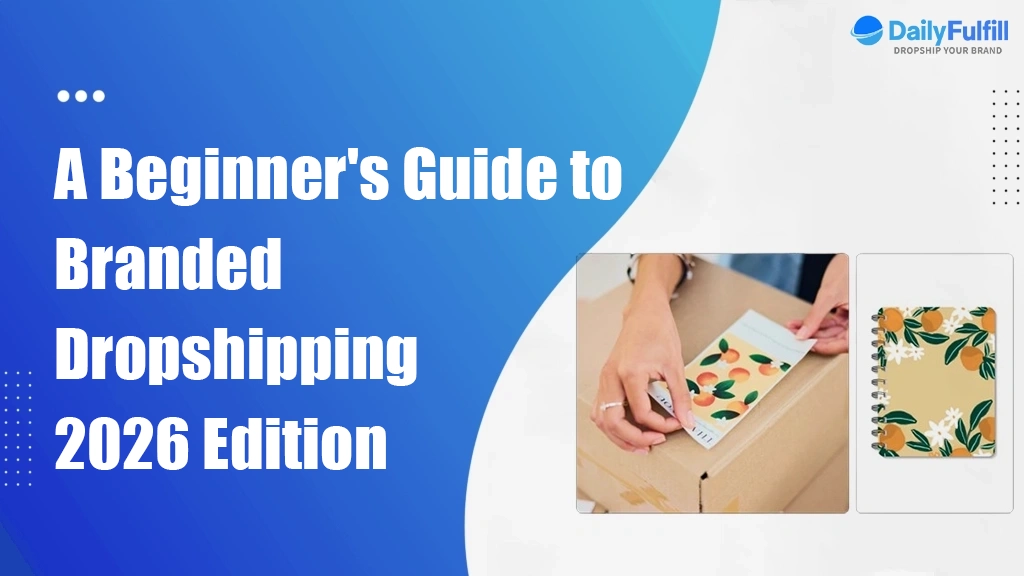
At this level, the product stays the same, but the experience of receiving it changes. Instead of a generic poly bag, the order arrives in a custom box or branded mailer, with a logo sticker, a thank-you card, sometimes a small insert or discount code. Nothing about the item itself is altered — you’re upgrading the unboxing.
This is the highest-return first step for one reason: it’s cheap and the minimums are tiny. Packaging typically runs from around $0.10 to $0.70 per order depending on whether you’re adding cards, mailers, or full boxes, and minimums are low enough (often around 100 pieces) that you can start without real risk. For that small cost you get the thing competitors selling the identical product don’t have — a package customers photograph, post, and remember. It’s the cheapest customer-retention tool in ecommerce.
Who it’s for: every brander, day one. If you only do one thing, do this. The setup, pricing, and materials are a service question rather than a concept, so we keep the how-and-how-much out of this guide — see our custom packaging service for the specifics, and how custom packaging increases sales for why it works.
Level 2 — Private label (your logo on the product itself)
Here you stop branding only the box and put your identity on the item. Depending on the product, that means a heat-transferred or printed logo, an embossed mark, a woven neck label on clothing, a laser engraving on metal, or pad printing on hard goods. The product is no longer just “a generic item in your box” — it’s visibly yours.
This matters because it changes what competitors can do. At Level 1, a rival can sell the same item and copy your photos; the moment your logo is on the product, they can’t pass off your branded item as theirs, and customers can no longer price-compare the exact same listing across ten stores. It’s the step where you genuinely separate from the pack. The trade-off is a bit more commitment: minimums and lead times are higher than packaging (they vary by product and method), and you generally want a validated product before you invest in branding the item itself.
There’s also a related distinction people mix up — white label vs private label — which decides how much you can customize and how exclusive it is. That’s a model question with its own depth, so rather than rehash it here, see our full breakdown in dropshipping vs private label, and the private label dropshipping service if you’re ready to apply it.
Who it’s for: stores with a proven winner worth committing to — the product you’ve decided to build around rather than keep testing.
Level 3 — Custom manufacturing (your own product)
At the top level, you change the product itself — the material, the shape, the color, an added feature — so what you sell genuinely doesn’t exist anywhere else. This is no longer just branding a generic item; it’s light product development. You’re working with a factory to make something to your spec.
This buys the strongest position there is: a product competitors can’t simply buy and resell, a real moat, and the highest brand loyalty. But it’s the biggest commitment by far — higher upfront investment, larger minimums, longer lead times, and real product-development effort. It only makes sense once a brand is established and a product is proven enough to justify building a unique version of it.
Who it’s for: established brands scaling a proven bestseller into something defensible. Most stores never need to go this far — and that’s fine. The model works at every level.
Which level are you at?
The three levels map cleanly to where a store is. If you’re testing products, you’re at Level 1 — add packaging to every order and keep your branding cheap and flexible. When a product proves itself, climb to Level 2 and put your mark on that winner. And only when a brand is built and a bestseller is undeniable does Level 3 become worth the investment. The mistake isn’t being at a low level — it’s reaching for a higher one before your product has earned it.
Why branded dropshipping matters in 2026
Branding used to be optional. In 2026 it’s closer to survival, for three reasons worth stating plainly:
Ad costs make one-time buyers unprofitable. When it can cost $15–$20 in ads to win a single customer, a sale you make once barely breaks even. You only profit when that customer comes back — and people come back to brands they remember, not to a grey bag from an unknown store. Branding is what turns a one-time buyer into a repeat one.
Thinner margins after the tariff shift. With the end of de minimis adding import duty to every low-value order, commodity dropshipping margins got squeezed. A $5-margin generic product can’t absorb that; a branded product sold at a higher perceived value can. Branding is margin protection, not just marketing.
Trust decides whether people buy at all. Buyers have been burned by scam-looking stores and 30-day shipping. A generic-looking store reads as risky; a branded experience reads as a real company, which lifts conversion and cuts the “item not received” chargebacks that can threaten your payment account.
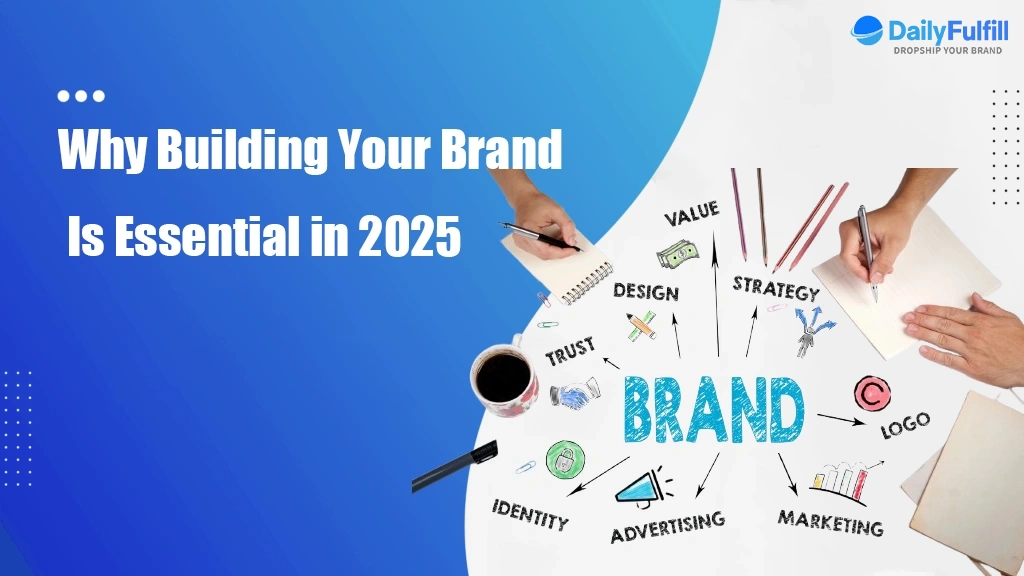
That’s the short version. For the full case — the real numbers behind ad costs, repeat-purchase economics, and how branding stops chargebacks — see why building your brand is essential in 2026.
Branded vs traditional dropshipping: is it worth it?
For most stores in 2026, yes — but the honest answer depends on your stage. Traditional dropshipping is the right tool for testing: it’s fast, cheap, and lets you learn what sells. The problem is that it has no ceiling — you’re locked into price wars on a product anyone can copy. Branded dropshipping is what you graduate to once a product proves itself, trading a little extra cost and effort for higher margins, repeat customers, and a store competitors can’t undercut.
The real decision isn’t “branded or traditional” forever — it’s when to switch. We keep the full head-to-head here short on purpose, because the exact cost-and-profit comparison and the signal for when to make the move have their own breakdown: see is branded dropshipping better than traditional dropshipping for the numbers.
How to get started?
The path is simpler than it sounds, and it follows the three levels. Start at Level 1: add custom packaging to every order while you’re still testing — it’s cheap and low-risk. When a product proves it sells, climb to Level 2 and put your logo on that winner, which means moving it from a generic marketplace seller to a sourcing agent who can brand and ship it for you. Only build toward Level 3 once the brand is established.
That’s the concept. For the exact step-by-step — picking a niche, choosing a brandable product, finding the right agent, and setting up your packaging and store — follow how to start branded dropshipping.
If you already know you want your orders branded, that’s the part we handle: we source your product, apply your packaging and labels, store everything for free, and ship under your brand — the same setup behind 6,000+ active stores at a 4.9★ Trustpilot rating. See our branded dropshipping service to start.

 English
 Français
 Deutsch
 Nederlands
 Polski
 Español