
 English
 Français
 Deutsch
 Nederlands
 Polski
 Español
Best Underwear Dropshipping Suppliers 2026: Top 8 Compared
Compare the 8 best underwear dropshipping suppliers in 2026 — pricing, MOQ, private label, sizing, and packaging. Find the right fit for your store.
Sleep gummies on your For You page. Creatine in every gym bag. Greens powders in half the wellness content you scroll past. Supplements have moved from a niche buy into an everyday routine, and the appeal for a seller is obvious: people don’t buy a supplement once. They buy it, it becomes part of a daily habit, and they reorder — month after month. In a market where paid traffic only gets more expensive, a product with repeat purchases built into it is rare and worth a lot.
That same appeal is why supplements are one of the least forgiving categories to enter. This is a Your-Money-Your-Life product — something people put in their bodies — and both regulators and the platforms you sell on treat it that way. Two decisions decide whether a supplement store lasts, and they happen to be the two things most “how to start” guides wave past: where you source and fulfill your product, and what you are legally allowed to say about it. Get either one wrong and it won’t matter how good your ads are — you end up with chargebacks, a flagged store, or a compliance letter.
This guide is written from the fulfillment side of the business. As an operator moving over 20,000 orders a day for stores across 50-plus countries, we see what happens after the sale — which products come back, which claims get stores shut down, and where the shipping math quietly eats a margin. We’ll walk through the real steps to launch, but the weight of this guide sits on those two decisions — including an honest look at when it makes sense to source from China through a partner, and when a first-time seller is better off starting on a US white-label platform instead.
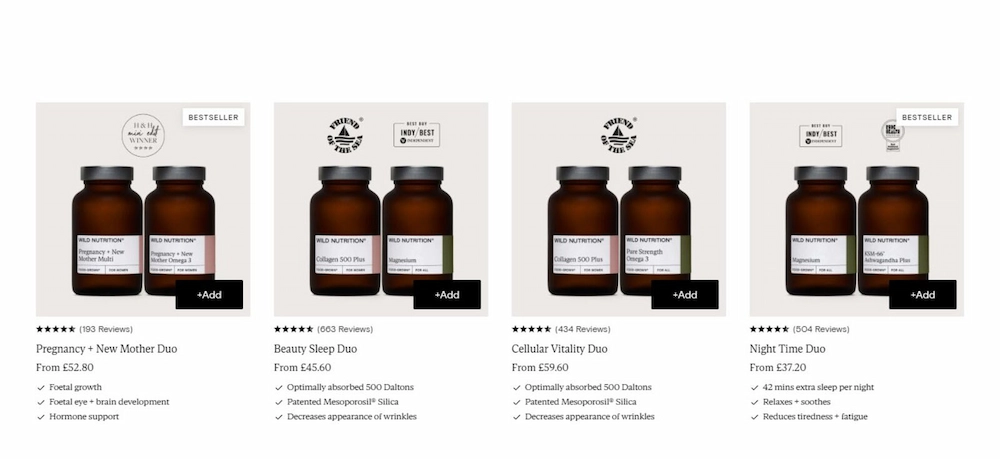
Whether the market is big enough was never the real question. Supplements are mainstream — roughly three in four US adults now take them, a rate that has held steady year after year rather than spiking and fading. The honest question isn’t whether demand exists. It’s whether the category is worth it for you — because the thing that makes supplements attractive and the thing that makes them hard are the same trait.
Start with the attractive part, and it’s the reason we’d steer a serious seller here over most other niches: a supplement is a routine, not a one-time purchase. Someone who starts a daily magnesium or a nightly sleep gummy doesn’t reorder because your retargeting caught them — they reorder because they ran out. That turns a single conversion into months of revenue, which is why subscription models fit this category so naturally. In a year when the cost of acquiring a customer on Meta or TikTok only climbs, a product that pays you back over twelve months instead of one checkout is a structural edge, not a growth hack. And the same research points to buyers who increasingly want a regimen built around them specifically — nearly seven in ten supplement users now say a personalized approach matters when they choose products — which is precisely the opening a focused brand can fill and a generic reseller cannot.
Now the part the excitement skips. Everything that makes the repeat revenue possible — trust, a product people put in their bodies, a regulated label — also raises the floor to entry. You’ll answer to advertising rules an apparel seller never thinks about. Your payment processor will file you under higher-risk. And cautious buyers won’t convert on a thin store with stock photos and no credibility to point to. This is not a test-it-this-week, kill-it-next-week niche; treated like one, it punishes you. Treated as something you build to look legitimate and keep compliant, the repeat-purchase economics reward that patience more than almost any category we handle.
So it’s worth it — as a build, not a flip. The rest of this guide is about the decisions that determine which of the two you end up running.
Before you think about products or ads, you make one decision that quietly sets your margin ceiling, how much of a brand you actually own, and how fast you can launch: which operating model you run. There are four, and they sit on a single spectrum — each one trades more commitment for more control and more margin.
| Model | How it works | Brand control | Margin | Commitment | Best for |
|---|---|---|---|---|---|
| Traditional dropshipping | Resell items straight from a supplier’s catalog; the supplier ships each order | None — generic product and packaging | Lowest | None (no MOQ, no upfront stock) | Testing whether a niche or audience responds at all |
| White label | Put your label on a ready-made stock formula the manufacturer already produces | Label and packaging only; the formula is shared with other sellers | Low–moderate | Low (often little or no MOQ via platforms) | Launching a branded store quickly on limited capital |
| Private label | The manufacturer produces to your specification and packages it under your brand alone | Formula-level input plus full branding | Higher | Meaningful (a minimum order, usually in the low hundreds of units per SKU) | Building a brand you intend to own and scale |
| Custom formulation | You develop a formula from scratch with the manufacturer; the product is fully proprietary | Complete — both the product and the brand are yours | Highest | Highest (MOQ plus formulation lead time and cost) | Differentiating on a genuinely unique product; later-stage brands |
These aren’t four rungs you climb in order — they’re four positions on one line, trading commitment for control. Traditional dropshipping earns its spot at the bottom for exactly one job: finding out whether an audience responds before you spend a cent on inventory. But treat it as what it is — a validation tool, not a business you can defend. You’re selling the same catalog item, in the same generic bottle, as everyone else who found it, and nothing stops a customer from reordering straight from the source next time. In a repeat-purchase category, that’s not a small leak.
The supplement businesses that last live in the middle and upper end of the table. It’s also where the personalization demand from the last section actually gets met: a shared stock formula can’t be built around a specific audience, but a private-label or custom product can be. The tradeoff is worth stating plainly — the moment you move past catalog reselling, you take on a minimum order, and with custom formulation, lead time and formulation cost on top. You stop paying per sale and start committing to a batch.
Which entry point is right comes down to your capital and how sure you are of your niche — and just as much, to where you source and fulfill that batch. A private-label minimum order is a very different decision depending on whether it lands in a warehouse near your customers or sits halfway around the world. That’s the question the next section takes on directly.
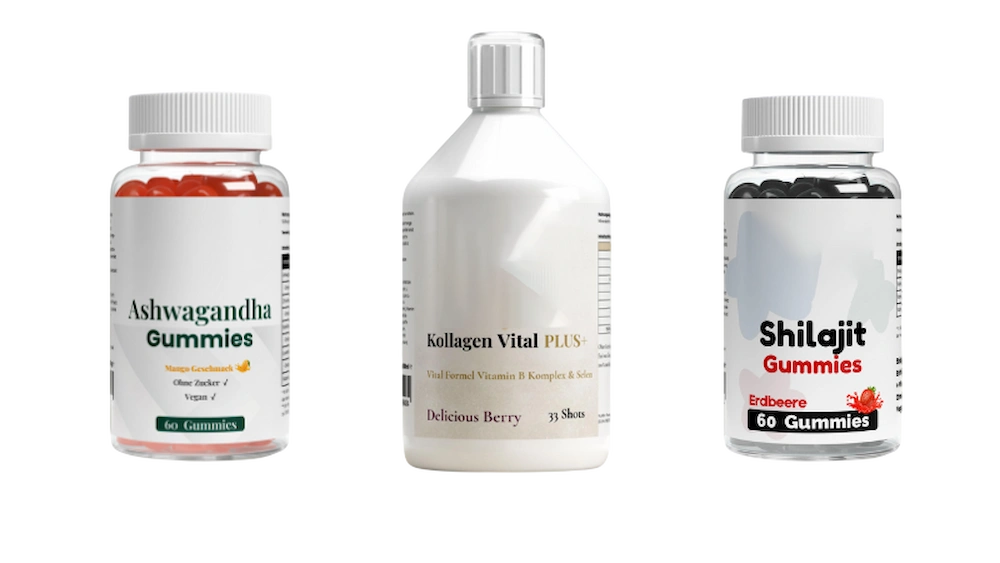
This is the decision almost every guide skips, usually because the guide is published by a company that only offers one of the answers. There is no universally right choice here. There’s a right choice for your stage, and getting it wrong in either direction costs you — either margin you didn’t need to give away, or a launch that collapses under commitments you weren’t ready for. So here’s both sides, plainly.
The US white-label path (for example, Supliful). Platforms like Supliful exist to get a first-time seller live with almost no friction. You sign up, pick from a catalog of stock products, put your label on them, and connect your store; when an order comes in, the platform prints your label, packs, and ships it. There’s typically no minimum order on the core catalog, fulfillment is fast within the US, and the underlying products come from FDA-guideline facilities — meaning a lot of the compliance groundwork is handled before you ever touch it. For someone validating an idea, that is genuinely hard to beat. The tradeoffs are the flip side of the same coin: you’re selling a shared stock formula that a hundred other sellers can also label, so differentiation is thin; you pay for the convenience in your unit cost, which caps your margin; and the model is built for the US — international shipping is limited compared with a global operation, and it charges a monthly fee on top. It’s the fastest way to start. It is not the cheapest way to scale, and it barely serves the EU.
The China sourcing path. Sourcing your product from a Chinese manufacturer — through a sourcing-and-fulfillment partner rather than by cold-emailing a factory yourself — inverts that profile. Your cost of goods drops substantially, which is the entire margin story in a category where ad costs keep rising. You get real formulation control: private-label and custom formulas are on the table, not just a shared stock SKU. And the breadth of what you can make is far wider. The costs are equally real and worth stating without spin: you commit to a minimum order instead of paying per sale, more of the supplier-vetting and compliance responsibility sits with you (which is why the next two sections exist), and — the part that quietly kills margins in 2026 — shipping supplements one parcel at a time out of China is now slow and expensive. That last problem has a specific solution, which is the third path.
| US white-label (e.g. Supliful) | China sourcing + fulfillment partner | |
|---|---|---|
| Upfront commitment | None — no MOQ on core catalog | A minimum order per SKU (typically low hundreds of units) |
| Time to launch | Fastest — live in days | Slower — sampling and a first order come first |
| Unit cost / margin | Convenience priced in; margin capped | Substantially lower cost; the margin lives here |
| Formulation control | Label only; shared stock formula | Private label or fully custom formula |
| Delivery speed (US) | Fast, domestic | Fast if fulfilled from a US warehouse; slow if parcel-shipped from China |
| EU / international reach | Limited | Strong, when the partner runs EU lanes |
| Compliance handled for you | Mostly | Shared — you must vet, but a good partner does the heavy lifting |
| Best stage | Validating an idea, US-only, minimal capital | Scaling a validated brand on margin and reach |
The third path — and where the tradeoff dissolves. The one genuine weakness of China sourcing, slow and costly per-parcel shipping, isn’t a law of physics. It exists only when every order clears customs individually. Ship a batch into a US or EU warehouse once, clear the duty in bulk, and every order after that is a domestic delivery — you keep the China cost advantage and get the local delivery speed a US platform offers. That combination — manufacturing cost from China, fulfillment speed from a warehouse near your customer — is what makes the model viable at scale in 2026, and it’s the reason the shipping and tariff math in the coming sections matters as much as the product does.
So which should you pick? Honestly, by stage:
If you’re on day one, some of this guide is aimed at where you’re heading rather than where you are today, and that’s fine. Bookmark it. The moment your validation turns into real orders, the sourcing and compliance decisions below stop being theoretical and start deciding your margins.
Most guides tell you to “stay FDA compliant” and move on, which is about as useful as telling someone to “drive safely.” So here’s the part that actually matters — the single discipline that, done wrong, gets supplement stores shut down and payment accounts frozen: you cannot market a supplement like a drug. The moment you claim your product treats, prevents, cures, or mitigates a disease, the FDA can treat it as an unapproved drug — and a dietary supplement making a drug’s claims is, by definition, being sold illegally. This isn’t a paperwork technicality. It’s the line the whole category is built around.
The line: structure/function claims vs disease claims. Supplements are allowed to make structure/function claims — statements about how an ingredient supports the normal structure or function of the body. The FDA’s own examples are “calcium builds strong bones,” “fiber maintains bowel regularity,” and “antioxidants maintain cell integrity.” What they cannot make are disease claims — that the product diagnoses, treats, cures, or prevents a disease — because those claims are legally reserved for drugs. Same ingredient, same bottle; the difference is entirely in the words. Here’s what that looks like across the products you’re most likely to sell:
| Product | ✅ Allowed (structure/function) | ❌ Not allowed (disease claim) |
|---|---|---|
| Sleep gummy | “Supports restful sleep” / “helps you unwind before bed” | “Treats insomnia” / “cures sleep disorders” |
| Immune / vitamin C | “Supports a healthy immune system” | “Prevents colds and flu” / “fights infection” |
| Joint formula | “Supports joint flexibility and mobility” | “Relieves arthritis” / “treats joint pain” |
| Calcium / bone | “Helps build and maintain strong bones” | “Prevents osteoporosis” |
| Mood / ashwagandha | “Helps you manage everyday stress” | “Treats anxiety” / “cures depression” |
| Blood sugar support | “Helps maintain healthy blood sugar already within the normal range” | “Lowers blood sugar” / “manages diabetes” |
That last row isn’t a typo. The qualifier “already within the normal range” is what keeps a metabolic claim on the legal side of the line — drop it, and “supports healthy blood sugar” starts to imply you’re treating a condition. This is exactly the level of precision the category demands and the generic guides never mention.
The trap most sellers fall into: implied claims. You do not get around the rule by avoiding the disease’s name. A statement that never mentions a disease can still be a disease claim if it points to the recognizable signs or symptoms of one, so that treating the disease can be inferred. “Relieves the aches and swelling of arthritis” names a symptom set and is out, even though it’s phrased as a benefit. The same applies to using drug-like terminology, or even a product name that implies disease treatment. Customer testimonials and imagery count too — if a review on your page says the product cured someone’s migraines, you’re now making that claim.
Two more things you owe the label. First, any structure/function claim requires a disclaimer on the label stating that the FDA has not evaluated it and that the product is “not intended to diagnose, treat, cure or prevent any disease.” Second, while a supplement doesn’t need FDA approval before you sell it, the manufacturer must notify the FDA within 30 days of first using a structure/function claim, and you must hold evidence that the claim is truthful before you make it — not after.
The part dropshippers get wrong: the label isn’t where you’ll slip — your ads are. A good manufacturer hands you a compliant label. Your risk lives somewhere they don’t control: your ad copy, your landing page, your email flows. The FDA governs what’s on the label; the FTC governs what you say in advertising and marketing — and a product sold online answers to both. You can source a perfectly compliant bottle and still torch your business with one Facebook ad that promises to “melt fat” or “beat anxiety.” The words you write are the exposure.
Why this is operational, not just legal. Payment processors treat supplements as a high-risk category before you’ve said a word — and aggressive or borderline claims are exactly what trigger a review, a rolling reserve, higher fees, or a frozen account. Getting the language right isn’t only about avoiding a regulator’s letter; it’s what keeps your ability to actually take money. In this category, compliant copy is infrastructure.
The reassuring flip side: a compliant supplement business is, more than anything, a discipline about language. Get the words right — supportive, honest, structure/function — and most of the legal and operational risk simply doesn’t materialize. (This section covers the US framework, FDA and FTC; the EU runs a different claims regime, which we get to below. And to be clear, this is general guidance, not legal advice — for your specific products, have a regulatory specialist review your claims.)
Every guide tells you to “choose a GMP-certified supplier” and stops there — which is the single least helpful sentence in this entire industry, because “GMP certified” on its own is close to meaningless. This section is the part they skip: how to actually verify a supplement manufacturer. It doubles as a reality check, because once you see what standing behind an ingestible product really requires, you’ll understand why who handles this vetting is one of the most consequential decisions you’ll make.
First, two myths to kill.
“Our supplements are GMP certified.” No supplement is. GMP certification applies to the facility’s processes and documentation, not to the final product or any individual batch. A factory is audited; a bottle is not. So when a supplier’s pitch says the product is GMP certified, they’ve either misunderstood their own certificate or they’re hoping you will.
“FDA approved.” This does not exist for dietary supplements. The FDA does not issue cGMP certificates and does not pre-approve supplement products or facilities. It registers facilities, inspects them, and issues Form 483 observations or Warning Letters when it finds problems. Any manufacturer marketing itself as “FDA approved” is misrepresenting the regulation. What you verify instead is two separate things: a current FDA Food Facility Registration number — which is just an administrative filing, not a quality mark — and independent third-party cGMP verification (NSF, NPA, or USP) against the supplement standard, 21 CFR Part 111.
The distinction that catches almost every importer. Not all “GMP” is the same GMP, and this is where a factory can look far more qualified than it is. Dietary-supplement cGMP is 21 CFR Part 111. Food cGMP — which governs functional beverages and food products — is a different standard, 21 CFR Part 117. Drug cGMP (Parts 210/211) is stricter still. A manufacturer can hold an impressive wall of food-safety certificates — FSSC 22000, ISO 22000, HACCP, Codex GMP — and every one of them can be legitimate while none of them is the supplement-specific standard the US market expects for a dietary supplement. Those are food-framework certifications. They are real and worth having, but they answer a different question. Before you assume a factory is qualified for your product, ask specifically which standard its supplement production is audited against — and don’t let a stack of food certificates stand in for the one that matters.
Match the audit to your exact product. A facility audited for capsules may not be audited for gummies or softgels. Certification has a scope, and if your product’s dosage form isn’t inside it, the certificate doesn’t cover what you’re selling. The three questions to ask about any GMP claim: certified by whom, at which facility, and for which dosage forms.
The three documents to demand before you send a deposit.
Two free cross-checks worth doing. Search the FDA Warning Letters database by the facility’s name; a warning letter in the last couple of years is worth asking hard questions about. And confirm every certification directly with the body that issued it — some manufacturers claim certifications they don’t actually hold.
Red flags, at a glance:
One honest limit — and the point of all this. Even a real 21 CFR Part 111 audit is a floor, not a guarantee: it confirms that quality systems exist, not that every batch is pure or accurately labeled, and products from certified facilities can still be recalled. That’s why serious brands pair GMP with their own product-level testing. But read that whole checklist back — verifying registrations, distinguishing food GMP from supplement cGMP, matching audit scope to dosage form, reading accredited COAs, monitoring warning letters, commissioning audits for large orders. That is real, ongoing work, and a first-time seller cold-emailing a factory on a B2B marketplace will not do it well. This is precisely the work a sourcing-and-fulfillment partner exists to absorb. When a manufacturer enters a serious partner’s network, this is the file that gets built and kept current — which is why “we’ve vetted our manufacturers” should mean a documented process like the one above, not a line on a homepage. Ask any partner to show you theirs.
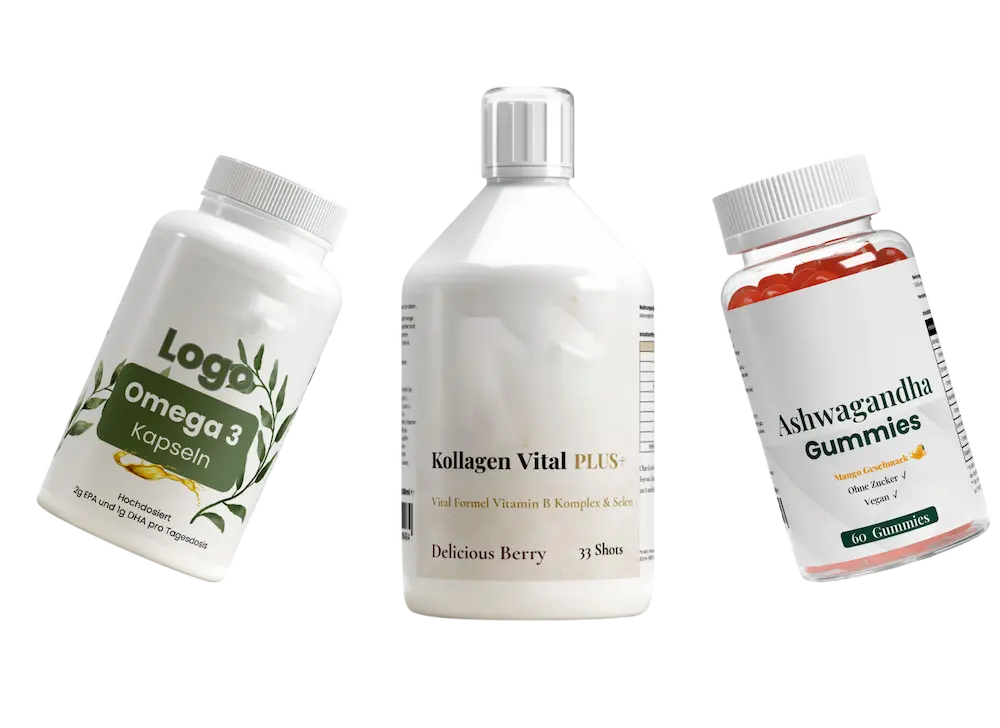
The single biggest change to this business model in 2026 has nothing to do with which product is trending. It’s that the tax rule that made parcel-by-parcel dropshipping from China viable — the one that let small packages enter duty-free — is gone. If you build a supplement store on the old math, you won’t notice the problem until the duties start landing on every order.
What actually changed, in the US. The $800 de minimis exemption that let low-value shipments clear customs duty-free has been eliminated. It went in two waves — China and Hong Kong first, effective May 2, 2025, then all other countries from August 29, 2025 — and a February 2026 executive order continued the suspension. As of 2026 it remains firmly in place with no indication of reinstatement. Every commercial shipment now requires a formal or informal customs entry, a 10-digit HTS classification, and duty payment regardless of value. (For the record, the earlier IEEPA-based tariffs were rolled back in early 2026 — but the de minimis suspension rests on separate legal authority and was unaffected, so the duty-free door stayed shut.)
What changed for your EU lanes. The same shift is hitting Europe on a slightly later clock. The EU agreed to remove its €150 low-value duty exemption, and as of July 1, 2026, a temporary €3-per-item customs charge applies to low-value parcels (those valued under €150), as a bridge toward full standard tariff treatment. The charge is levied per item category (per tariff heading), so a parcel with several different product types can attract it more than once. The UK still holds a £135 threshold, but has confirmed it will be gone by March 2029. The direction is identical across all three of your core markets: the era of duty-free low-value entry is over.
Why this lands harder on supplements than on most categories. Two reasons. First, supplements made in China are China-origin goods, and China-origin currently faces the steepest treatment of all — as of mid-2026, postal parcels from China run around 54% (down from a peak of 120%), with commercial carriers around 30%, versus the base HTS rate plus the 10% surcharge for most other origins. Those figures move with trade negotiations, but the ranking doesn’t: if you’re sourcing from China, you’re in the highest-duty lane, not the lowest. Second, supplements are low-value, high-frequency, repeat-purchase items — the exact profile that per-parcel duty punishes most, and a separate flat per-parcel handling fee is scheduled to arrive by November 1, 2026, stacked on top.
Read those two facts together and the old dropship reflex — route each order straight from a Chinese supplier to the customer — is no longer a business. It’s a slow leak.
The math, laid side by side. Take an illustrative bottle of gummies: roughly $6 landed manufacturing cost, sold at $29. Here’s what the two fulfillment structures actually do to it:
| Parcel-by-parcel from China | Bulk into a US / EU warehouse | |
|---|---|---|
| Customs event | Every single order | Once per bulk shipment |
| How duty is paid | Ad valorem on each parcel, plus per-parcel processing — and the new flat handling fee on top of every one | Once, in bulk, on wholesale value — a single predictable line item |
| Who gets the surprise bill | Often the customer, at their door | You, upfront; the customer sees nothing |
| Delivery time | 10–15+ days, plus customs delay | 2–4 days, domestic |
| Typical failure | Doorstep fees → refused parcels, 1-star reviews | Clean domestic delivery |
| Effect on a reorder | Friction on every repeat purchase | Frictionless reorders |
The numbers underneath are directional, not a quote — rates shift by origin, SKU, and month — but the shape doesn’t change. On that $29 bottle, per-parcel duty and processing can quietly claim several dollars of margin on every order, while a bulk import pays the same duty once and spreads the customs overhead across the whole shipment. You don’t dodge the tariff either way — you decide whether you pay it efficiently and invisibly, or repeatedly and in front of your customer.
Why this decides the whole business. In a repeat-purchase category, the failure mode of parcel-by-parcel isn’t only the margin — it’s that a surprise customs fee at the door is exactly what turns a would-be subscriber into a refused package and a bad review. Bulk-to-local-warehouse fulfillment converts the tariff from a tax on every order into a one-time cost, and turns every delivery into a fast domestic hop with nothing owed at the door. It’s not a coincidence that the largest China-origin sellers responded to de minimis ending by moving fulfillment into US warehouses and pre-clearing inventory in bulk. It’s the only structure that survives the new math — and it’s the same conclusion the sourcing section reached, now with the tariff arithmetic behind it.
Which is why, in 2026, the decision that makes or breaks a supplement store isn’t the product. It’s the fulfillment structure — and that’s the next section. (Duty rates and thresholds are current as of mid-2026 and change frequently; confirm the live rate for your specific product and origin before you price.)
Every guide ranking for this topic is written for the US market, and it shows. The moment your lanes reach Europe — which, given the tariff-and-warehouse advantage compounds there, is exactly where you’d want them — you step under a different rulebook, and in places a stricter one. Two things change that can quietly make a US-proven product unsellable: which ingredients you’re allowed to offer, and what you’re allowed to say about them.
The ingredient trap: legal in the US, not a supplement in the EU. The same bottle can be an everyday supplement in America and a regulated medicine in Europe. The textbook case is melatonin. In the US it’s sold freely as a dietary supplement at any dose; across most of Europe it’s classified as a medicine, and there is no single EU-wide rule — each member state decides. The result is a patchwork you have to sell into country by country:
Put plainly: the 5mg or 10mg melatonin sleep gummy that’s a bestseller in the US cannot legally ship into the UK as a supplement, and only in a fraction of its dose, if at all, into Germany. Combination sleep formulas make this worse, because each additional active ingredient carries its own per-country status — so the formula has to be cleared ingredient by ingredient, market by market. (Separately, some newer ingredients require EU “novel food” authorization before they can be sold at all — another box to check before you list.)
The claims regime is tighter, too. In the US you work within the fairly generous structure/function framework. The EU doesn’t work that way: health claims have to be specifically authorized by regulators, and only authorized claims may be used. Melatonin is the clean example again — across the EU, essentially two melatonin claims are permitted, each tied to a specific dose: that it helps reduce the time taken to fall asleep (at 1mg per serving) and that it eases jet lag (at 0.5mg). Anything beyond the authorized wording, at the authorized dose, isn’t allowed. You cannot reason your way to a benefit the way US structure/function language sometimes lets you; if it’s not on the approved list, you can’t say it.
Doses aren’t harmonized either. The EU has never fully standardized maximum permitted levels for vitamins and minerals in supplements, so individual member states set their own ceilings. A dose that sits comfortably inside the limit in one EU country can exceed the cap in another — which means “one dose for all of Europe” is not a safe assumption.
What this means in practice. You do not run a single global catalog. You segment. Some SKUs and some doses are US-only; others are EU-legal; a few are legal in one EU country and not its neighbor. And your marketing copy has to be rewritten per market against the authorized-claims list — not translated, rewritten. This is precisely the kind of thing a fulfillment partner with real EU lanes should be able to tell you before you list a product: whether a given SKU, at a given dose, can actually clear into each destination country. A generic parcel route from China cannot; it just ships the box and lets it fail at the border. Before you commit to any product for the European market, confirm its status — ingredient and dose — for each specific country you intend to sell into.
That gap between “a partner who knows the lane” and “a route that just moves boxes” is the whole subject of the next section.
Everything up to here — the sourcing choice, the tariff arithmetic, the European rulebook — converges on a single operational fact that most sellers discover too late: in supplements, fulfillment is not the boring back end. It’s the part your customer actually experiences, and in a repeat-purchase category, it’s what decides whether a first order becomes a subscription or a refund. The product earns you the first sale. Fulfillment earns you the second, the third, and the twelfth — which is where the money in this category actually lives.
Supplements are genuinely harder to fulfill than most things you could sell, and the reasons are specific:
They expire, and they come in batches. Every bottle has a lot number and an expiration date. That means fulfillment has to run on lot control and date-checking — so a customer never receives a short-dated or expired product, and so that if a batch is ever recalled (which, as covered earlier, can happen even to product from a certified facility), you can trace and pull exactly the affected units. A warehouse that treats a supplement like a phone case will ship you a one-star review with a three-month-old bottle inside.
They’re physically sensitive. Gummies soften and fuse in heat. Probiotics lose potency. Some actives degrade with humidity and light. Clean, temperature-aware storage isn’t a premium add-on here; it’s the difference between the product that arrives and the product you advertised.
They don’t ship on every lane. Ingestibles need routes that accept them, with the correct declarations and documentation — the same clearance discipline the previous section described. A generic parcel path that moves apparel fine will get a supplement delayed, returned, or seized at a border, and you’ll be refunding orders you thought you’d sold.
Reorders are the whole point, so repeat kitting has to be flawless. The economics of this category depend on the second and tenth purchase arriving as reliably as the first — correctly lotted, on time, every cycle. Subscription revenue is only as solid as the fulfillment underneath it.
Now stack those against what the tariff section established. A surprise customs fee at the customer’s door, a ten-day transit, a melted gummy, a short-dated bottle — in most categories any one of these costs you a single order. In a trust category built on reorders, each one costs you the lifetime value that was the entire reason to be in supplements in the first place. Fulfillment failures here don’t dent a transaction; they cancel a relationship.
The structure that actually works is the one every previous section has pointed at: import your inventory in bulk into a warehouse close to your customers, clear the duty once, and fulfill each order domestically — with lot and expiry discipline, proper storage, and lanes built for ingestibles. That single structure is what survives the 2026 tariff math, delivers fast and clean, and makes reliable subscriptions possible. It’s not one advantage among several. It’s the operating model the whole category now requires.
This is the work we do. DailyFulfill fulfills over 20,000 orders a day for more than 6,000 stores across 50-plus countries, with warehouses in Yiwu and Guangzhou and established lanes into core European markets including Germany, the Netherlands, and Belgium. For a supplement brand, that means sourcing from vetted GMP partner manufacturers, moving your stock in bulk so it arrives near your customers rather than one slow dutiable parcel at a time, and handling it with the batch, expiry, and storage discipline an ingestible product demands — instead of leaving those problems for you to discover through refunds. The product decision is the part you can make in an afternoon. The operation behind it is what determines whether the brand is still standing a year from now — and it’s the part we’re built for.
If you’re weighing a supplement line and want to know whether a specific product, dose, and destination actually work end to end — from a compliant manufacturer to a clean delivery — that’s exactly the conversation to have before you launch, not after.
If you’ve read this far, you already understand the why behind each step. This is the sequence to actually execute, in order — because in this category, the order matters as much as the items.
Work these in order and most of the ways a supplement store quietly fails are closed off before you ever spend on ads.
Thinking about adding supplements to your store? Before you commit to a product, it’s worth knowing whether that exact SKU, dose, and destination work end to end — from a compliant manufacturer to a clean doorstep delivery. That’s the conversation we’re built for. [Talk to our fulfillment team →]
All regulatory figures — duty rates, dose limits, thresholds — are current as of mid-2026 and change frequently; verify against primary sources before you rely on them.
Yes. Selling supplements online is legal in every market discussed here, but it’s a tightly regulated category — you’re responsible for following the manufacturing, labeling, and advertising rules of every country you source from and sell into. Legality isn’t the constraint; compliance is.
No — and be wary of any supplier claiming to be “FDA approved,” because that status doesn’t exist for dietary supplements. The FDA doesn’t pre-approve supplement products or facilities. What you should verify instead is that the manufacturing facility is FDA-registered and independently audited to the US supplement standard (21 CFR Part 111), and that the manufacturer holds current third-party certification and can produce batch-specific Certificates of Analysis.
Yes, and China is where the manufacturing cost advantage and formulation flexibility live. The catch in 2026 is fulfillment: with de minimis gone, shipping supplements one parcel at a time from China is slow, dutiable, and margin-eroding. The model that works is sourcing from a vetted Chinese manufacturer and importing in bulk into a warehouse near your customers, so each order ships domestically. Sourcing from China and fulfilling from China are two different decisions — separate them.
Usually not the way you sell them in the US. Melatonin is regulated as a medicine across much of Europe: it’s prescription-only in the UK, restricted to very low doses in Germany, and capped at low doses as a supplement in France and Italy. A US-strength 5mg or 10mg gummy generally cannot be sold as a supplement in those markets. Always confirm each ingredient and dose, country by country, before listing for the EU or UK.
Supplements carry higher chargeback rates and heavier regulatory exposure than most retail categories, so processors apply extra scrutiny — sometimes rolling reserves, higher fees, or holds. Aggressive or non-compliant health claims are a common trigger. Secure a processor that explicitly accepts supplements before you launch, and keep your marketing claims clean.
It varies by manufacturer and product, but private-label and custom formulas typically start in the low hundreds of units per SKU — the tradeoff for owning your branding and formula instead of reselling a shared stock product. Traditional dropshipping and some white-label platforms have no minimum, which is why they suit validation, while private label suits building a brand you intend to scale.
Learn dropshipping tips, sourcing strategies and fulfillment insights from DailyFulfill
Compare the 8 best underwear dropshipping suppliers in 2026 — pricing, MOQ, private label, sizing, and packaging. Find the right fit for your store.
Step-by-step guide to launching an underwear dropshipping store in 2026. Sub-category selection, supplier sourcing, pricing with tariffs, TikTok launch.
Discover the 6 best dropshipping niches with steady demand and strong margins — plus real China sourcing, shipping, and compliance tips for each one.