
 English
 Français
 Deutsch
 Nederlands
 Polski
 Español
Best Dropshipping Suppliers in Germany 2026: Top 8 Compared
Compare 8 dropshipping suppliers for the German market — pricing, EU warehouse coverage, IOSS handling, and seller-stage fit. Honest review by a fulfillment operator.
The Netherlands is one of the more demanding markets in Europe to launch a dropshipping store — and one of the better ones to launch in if you’re willing to do the work properly. Mature consumers, strict consumer protection law, fast last-mile infrastructure, and the highest cross-border purchase rate in the EU all push the bar up; they also reward operators who clear it.
In 2026, the bar moved again. The €150 customs duty exemption is being phased out, the new €3 EU duty kicks in from July 1, and the EU is layering handling fees on top through November. Stricter EU product compliance enforcement (NVWA in NL specifically) is filtering out the operators who built stores around cheap, non-compliant Chinese SKUs. The “lazy dropshipping” path — list random AliExpress products, run Meta ads, hope for the best — is closing. What’s left is closer to a real e-commerce business: proper registration, compliant products, transparent pricing, and supplier relationships that survive scale.
This guide walks through eight steps to launch a dropshipping store in the Netherlands in 2026. Each step covers what to do, what’s NL-specific, and where the common failure points sit. We assume you’re starting from zero or near-zero — no entity registered, no store live, no supplier chosen. If you’re already operational and looking to optimize one specific piece, our comparison of the 8 dropshipping suppliers serving the Netherlands covers supplier selection in deeper detail.
DailyFulfill is a fulfillment company; we work with NL operators daily and have built this guide from the patterns we see — what works, what breaks, what costs more than people expect.
Niche selection determines everything downstream — supplier choice, ad creative, return rates, compliance burden. In NL specifically, three filters narrow what works.
Margin must absorb 21% VAT and the new €3 duty. Dutch consumers see VAT-inclusive prices at checkout (legally required), and from July 2026 every China-direct parcel under €150 carries an additional €3 customs duty. On a €15 product, that’s a 20% tax-and-duty stack before you account for ad costs. Niches with sub-€20 average order values rarely survive this in 2026 — focus on €30–€80 AOV territory where margin has room to absorb the cost stack.
Product compliance is enforced. The NVWA (Dutch Food and Consumer Product Safety Authority) actively monitors e-commerce stores selling non-compliant goods from outside the EU. Categories with strict EU regulation — children’s toys (EN 71), electronics (CE marking), cosmetics (CPNP registration), and food contact items — carry real fine risk if your supplier can’t prove compliance. Fines start around €525 and scale; product recalls are at the seller’s expense. Stick to categories where compliance is straightforward, or accept that you’ll need to vet supplier documentation seriously.
Return rates vary by category. Fashion runs 30–40% return rates in NL (consistent with EU averages); electronics around 10–15%; home goods and accessories under 10%. Dutch consumers exercise the 14-day wettelijke bedenktijd actively, and they expect free returns for online purchases. High-return categories aren’t off-limits, but they require either fatter margins or a return logistics setup that doesn’t bleed cash.
Practical filters: AOV of €30+, EU-compliant product categories, return rates manageable at your margin level. If a niche fails one of these, scaling will hurt later more than it helps now.
The Kamer van Koophandel (KvK) is the Dutch Chamber of Commerce, and registration with them is the legal starting point for any business in the Netherlands. The process is faster and cheaper than most countries — but the entity choice you make at registration carries real downstream consequences.
Eenmanszaak vs BV: the entity decision. Most NL dropshippers start as an eenmanszaak (sole proprietorship). Registration is a single online pre-form via DigiD plus an in-person KvK appointment, and you walk out with a KvK number the same day. The eenmanszaak has no minimum capital requirement, no notarial deeds, and qualifies for entrepreneur tax allowances (zelfstandigenaftrek, startersaftrek, mkb-winstvrijstelling) once you meet the 1,225-hour annual criterion. The trade-off: you’re personally liable for business debts, including with private assets.
A BV (Besloten Vennootschap) is a private limited company. Liability is contained to the company, but setup is more involved — notary required, share capital structure, higher accounting complexity, and around €500–€1,000 in setup fees plus annual maintenance overhead. Most NL dropshipping advisors recommend switching from eenmanszaak to BV around €100k–€150k revenue, where the tax-and-liability arithmetic flips. Below that, eenmanszaak is almost always the right call.
The registration process. Apply online through the KvK website using DigiD (NL residents) or via RNI registration first if you’re a non-resident without a BSN. The pre-registration form takes about 15 minutes. You then book an in-person appointment at any KvK office for the identification check — this can be scheduled up to 8 weeks ahead, and you can register up to 3 months before your intended start date. Registration fee is €82.25 (one-time, tax-deductible as of 2025). Your KvK number is issued at the appointment; the Belastingdienst forwards your BTW-id (VAT number) by post within 2 weeks.
Practical setup notes. You need a Dutch visiting address (your home address works for most eenmanszaak setups, subject to your rental contract or municipal rules), a clear description of business activities for SBI classification, and valid ID. A separate business bank account (zakelijke rekening) isn’t legally required for eenmanszaak but is strongly recommended for cleaner bookkeeping.
KvK registration triggers BTW registration automatically — the Belastingdienst sends your VAT identification number (BTW-id) by post within two weeks of your KvK appointment. You don’t apply for it separately. What you do decide is how you handle the four layers of VAT and duty that affect dropshipping operations in 2026.
Standard BTW filing. You charge 21% BTW on most sales to NL customers (some categories qualify for the reduced 9% rate, but rarely apply to dropshipping). Returns are filed quarterly through Mijn Belastingdienst Zakelijk. Quarter-end deadlines fall on the last day of the following month — Q1 returns due April 30, and so on. Late filings carry an €82 fine; underpayment penalties scale up to €6,709 depending on severity.
The KOR decision (and why most dropshippers skip it). The Kleineondernemersregeling (small business scheme) exempts you from charging BTW if annual turnover stays under €20,000. Sounds attractive — until you realize you also can’t reclaim VAT on ad spend, software, or supplier fees. For any operation running paid traffic, the math flips against KOR around €5,000–€8,000 in annual ad spend. Most growth-oriented dropshippers skip KOR entirely and operate under standard BTW from day one.
IOSS for China-direct shipments. From your first order onward, you need IOSS coverage on parcels under €150 from outside the EU — without it, your customer pays VAT (and from July 2026, the €3 duty plus handling fees) at delivery, which kills conversion. Two paths: register IOSS yourself through Mijn Belastingdienst Zakelijk under “EU-btw éénloketsysteem,” or have your supplier ship under their own IOSS number. Early-stage operators almost always use supplier IOSS for simplicity; growth-stage operators usually want their own for audit defensibility. Non-EU sellers need a NL-based fiscal intermediary to register IOSS independently, which adds €1,000–€3,000/year in service fees.
OSS for intra-EU sales. Once your cross-border B2C sales to other EU countries (Germany, Belgium, France, etc.) exceed €10,000 per calendar year — combined, not per country — you must apply the destination country’s VAT rate to those sales. OSS lets you handle this through a single quarterly return filed in NL, instead of registering for VAT in every country where you sell. Below €10,000, you can keep charging Dutch BTW on cross-border B2C and report everything domestically. Many sellers voluntarily opt into OSS before hitting €10,000 to avoid a mid-year invoicing switch.
The new €3 EU customs duty (from July 2026). Every parcel under €150 entering the EU from outside the bloc carries a €3 flat-rate customs duty per item, applied separately from VAT. The duty is per item category, so a multi-SKU shipment can stack multiple €3 charges. EU-warehoused inventory avoids the per-parcel duty (you pay duty once on the bulk import). Some suppliers absorb the €3 into their fulfillment quote; others pass it through as a transparent line item; some leave it on the customer at delivery. The third option destroys NL conversion rates — clarify with any supplier you’re considering how they’ll handle this from July 2026.
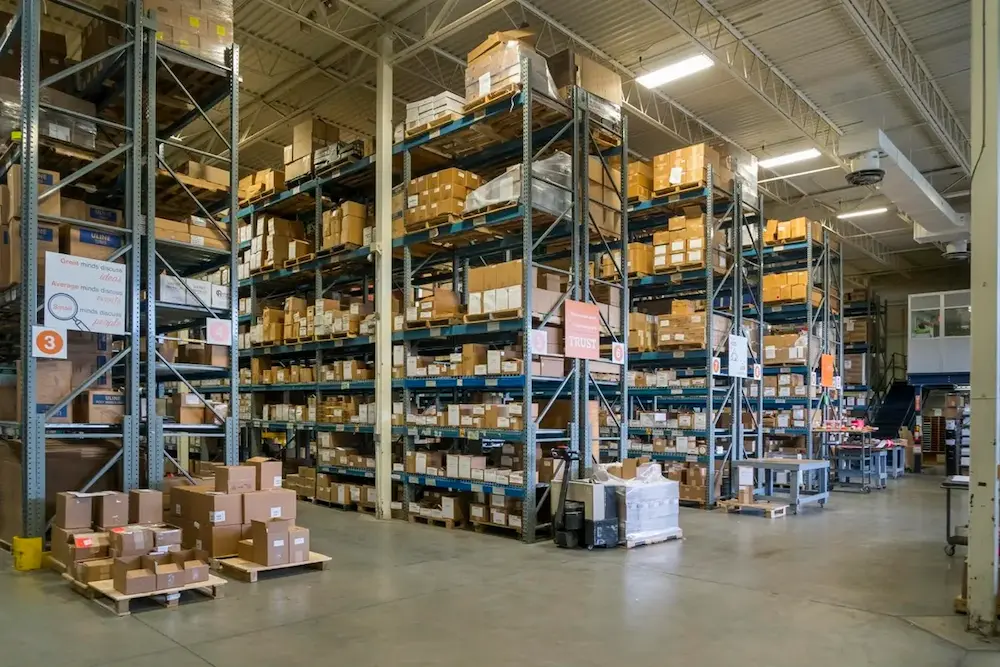
Supplier choice shapes more of your operation than any other decision — pricing structure, shipping speed, VAT compliance, return logistics, scaling ceiling. Get it wrong early and you’ll spend the next twelve months working around the constraints; get it right and the rest of the operation has room to grow.
Four supplier types serve NL dropshippers in 2026. Platform marketplaces like CJ Dropshipping or AutoDS aggregate Chinese suppliers with built-in automation, no monthly fees, and broad catalogs — built for testing and early-stage volume. EU-based curated directories (Spocket, AppScenic, Hertwill) trade catalog depth for 2–5 day intra-EU shipping and EU-resident VAT handling. Print-on-demand (Printful) suits brand-driven stores with custom designs. Agent fulfillment operators handle line-item pricing, dedicated account management, and optimized China-to-NL lanes — built for growth-stage operators past 5+ orders/day.
Match supplier type to your stage. At 0–5 orders/day, platform marketplaces almost always win on simplicity and cost. The catalog is broad enough to test products, IOSS is handled at platform level, and there’s no commitment. Past 5 orders/day, the math starts shifting: platform markup compounds, response times stretch, and the lack of dedicated agent attention starts costing more than it saves. That’s where agent fulfillment becomes worth the coordination overhead.
Vetting questions for any supplier you’re considering. (1) How is pricing structured — flat per-order or line-item? (2) What’s the typical NL transit range, and through which port? (3) How is IOSS handled, and from July 2026, how will the €3 duty be processed? (4) Which platforms do you integrate with — Shopify, WooCommerce, Bol.com? (5) What stage of seller is your service actually built for?
Question 3 is new for 2026 — most suppliers haven’t published clear €3 duty policies yet, and the answer reveals how operationally prepared the supplier actually is. Vague responses signal a supplier still working out their approach; specific responses (absorbed, passed through, or surfaced) tell you they’ve thought it through.
For a complete supplier comparison covering eight platforms across the four types above, see our best dropshipping suppliers in the Netherlands guide.
Most NL dropshippers use Shopify for the storefront. The platform is mature, the Dutch user base is large, and integration with NL-specific tools is straightforward — but there are 2026-specific traps in the setup.
iDeal is non-negotiable. Roughly 60% of Dutch shoppers use iDeal as their primary online payment method; without it, you lose more than half your potential conversions. The 2026 trap: Shopify Payments has tightened its iDeal eligibility rules, requiring 90 days of activity, 100+ completed orders, a paid Shopify plan, and a chargeback rate under 1%. New stores can’t access iDeal through Shopify Payments at launch. The workaround is Mollie — a Dutch payment gateway with no eligibility minimums, charging around €0.29–€0.32 per iDeal transaction. Most NL operators run Mollie alongside Shopify Payments long-term, since Mollie’s iDeal pricing is competitive and the dispute mechanics favor merchants.
Required and recommended legal pages. Three pages aren’t optional in NL. (1) Privacyverklaring — privacy policy under GDPR/AVG, must explain data collection, processing, and customer rights. (2) Herroepingsrecht / wettelijke bedenktijd — explicit notice of the 14-day return window EU consumers have without giving reasons. (3) Visible business contact information — KvK number, BTW-id, business address, email, and phone, accessible from any page. Algemene Voorwaarden (terms and conditions) is technically optional under Dutch law but strongly recommended; the Shopify NL policy generator produces a workable starting template.
Practical setup notes. Display all prices VAT-inclusive at checkout — legally required for B2C in the EU. Dutch is the default language for legal pages, even if your storefront is bilingual; English-only legal pages create enforceability issues. Use Sendcloud or a similar tool to integrate PostNL, DHL Parcel, and DPD as shipping carriers from day one rather than retrofitting them later.
Shipping configuration is where most launch-stage stores either set themselves up for healthy margins or lock in cost leaks they’ll fight for months. Four decisions matter at setup.
Shipping modes from China. Five lanes move goods from China to NL, each with a place:
Carrier integration for last-mile. PostNL is the dominant NL choice — most NL consumers expect to see it as a delivery option, and pickup point coverage is the densest in the country. DHL Parcel, DPD, and Budbee are common secondary options. Sendcloud is the standard Shopify integration for managing multiple carriers from a single dashboard.
DDP versus DAP at checkout. From July 2026, the €3 customs duty plus the planned EU handling fee plus member-state fees stack on top of VAT for non-EU shipments. If you ship DAP (customer pays at delivery), refusal rates climb meaningfully. If you ship DDP (you pre-settle everything), refusal rates stay low but per-order cost rises by roughly €4–€8. Confirm with your supplier which Incoterm they support on your specific lane, and price your storefront accordingly. The Rotterdam-clearance advantage is real for sea freight and consolidated agent lanes — parcels routed through Rotterdam typically clear 1–2 days faster than equivalent volume through Hamburg or Le Havre — but express courier shipments route through their own hubs (Leipzig, Cologne, Brussels) and don’t see Rotterdam.
Transit time displayed honestly. Quote a range, not a single number — “delivery in 6–12 business days” outperforms “delivery in 7 days” on review scores because customer expectations stay realistic. Pad the upper bound during Chinese New Year, Q4 peak, and any known disruption windows. Express options for high-margin SKUs help conversion on time-sensitive purchases without committing the whole catalog to express pricing.
NL is a competitive ad market — Meta and Google CPMs are higher than most EU countries, and Dutch consumers respond to social proof more than aspirational copy. Three channel decisions matter at launch.
Paid social and search. Meta (Facebook + Instagram) and Google Shopping/Search are the two primary acquisition channels for NL dropshipping in 2026. Realistic CPA on a €30–€60 product runs €15–€25 — meaning a 25–40% margin floor before media spend even starts paying back. Start with €30–€50/day budgets to gather data, expect 2–3 weeks of testing before you know if a creative angle works. TikTok ads are growing in NL but still cheaper than Meta for younger demographics; worth testing if your niche fits.
The Bol.com decision. Bol.com is the dominant Dutch marketplace (€5+ billion annual GMV), and it’s where many NL shoppers default to before searching elsewhere. Listing on Bol.com gives you instant access to high-intent traffic, but takes a 12–17% commission and requires NL-language listings, faster shipping commitments, and Bol.com-specific return handling. None of the major dropshipping suppliers integrate natively with Bol.com — operators typically use cross-listing tools like ChannelEngine or EffectConnect, or manage Bol.com orders manually. Worth the friction if your niche has strong Bol.com search volume; not worth it if your niche is better served by direct-to-consumer brand building.
Influencer and content marketing. Dutch consumers respond well to micro-influencers (5,000–50,000 followers) over mega-influencers — authenticity outperforms reach for conversion in this market. Expect €100–€500 per post for micro-tier collaborations. Long-form content (SEO blog posts, YouTube product reviews) compounds slower than paid ads but builds defensible margin once it ranks. Most growth-stage NL dropshippers run paid ads as the primary channel and content as a long-term moat.
Returns and support are where margin survives or quietly disappears. Dutch consumers exercise the 14-day wettelijke bedenktijd actively, and they expect responsive support in their preferred language.
Return logistics. EU consumer law requires you to accept returns within 14 days of delivery, no reason needed. Practical question: where does the parcel go back to? Returning to China is rarely viable — shipping costs often exceed the product value, and customers won’t tolerate the wait. Most growth-stage NL dropshippers use an EU return address (their own warehouse, a 3PL, or a supplier-provided EU return service) and absorb the cost as part of margin. Suppliers without EU return support push the entire return cost onto you.
Customer service basics. Respond within 24 hours during weekdays — anything slower triggers complaints to ConsuWijzer or chargebacks via the customer’s bank. Dutch is the preferred support language, but English is acceptable for most transactions; just don’t pretend to be Dutch when you’re not. Email and live chat cover most needs at launch; a phone number isn’t legally required but builds trust for higher-ticket purchases.
Track refund and refusal rates from day one. Both numbers feed back into supplier evaluation, ad ROAS, and pricing decisions — they’re operational metrics, not back-office paperwork.
Five patterns recur across operators we work with — predictable enough to be checklist material before launch.
Assuming “EU shipping” means fast or predictable. “Ships from EU” can mean Rotterdam, Hamburg, Warsaw, or Romania. Lane routing materially affects transit time and which member-state fees stack. Always confirm the actual entry point and last-mile carrier with your supplier before launch.
Choosing KOR while running paid ads. KOR exempts you from charging BTW, which sounds attractive — until you realize you also can’t reclaim VAT on Meta or Google ad spend, software, or supplier fees. At any meaningful ad budget (above €5,000–€8,000 annually), KOR loses more than it saves. Skip it from day one if you’re planning paid traffic.
Treating IOSS as the only VAT scheme that matters. IOSS handles VAT on China-direct shipments under €150. It doesn’t handle the new €3 duty, the planned EU handling fee, or any intra-EU sales. As you scale to Belgium, Germany, or France customers, OSS becomes equally critical — and crossing €10,000 in cross-border B2C without OSS registration triggers back-VAT and penalties.
Ignoring product compliance until something breaks. The NVWA actively monitors NL e-commerce stores. Children’s toys, electronics, cosmetics, and food-contact items all require EU compliance documentation your supplier must provide. Fines start at €525 and product recalls are at your expense — vet supplier documentation before listing.
Quoting a single transit time instead of a range. “10 days delivery” sets you up for refund requests when the parcel arrives in 14. A range (“6–12 business days”) outperforms a single number on review scores because customer expectations stay realistic, especially during Chinese New Year and Q4 peak windows.
DailyFulfill is the fulfillment agent we mentioned at the start. We work with 6,000+ sellers across 50 countries, ship from warehouses in Yiwu and Guangzhou, and run optimized lanes into NL daily. Our clients are typically growth-stage operators past the point where platform marketplaces start costing more than they save.
What we provide on the operational side: line-item pricing (product, pick-pack, shipping by lane — no flat-rate markup), dedicated agent fulfillment, IOSS-handled shipping for orders under €150, DDP for orders above €150, and Rotterdam-routed lanes when consolidation supports it. From July 2026, we’ll absorb or transparently surface the €3 EU duty as part of your fulfillment quote — your call, not the customer’s surprise at the door.
We work with sellers processing 5+ orders per day. If you’re earlier than that — testing your first product, validating an angle, running ads that haven’t found a winner yet — start with a platform like CJ or AutoDS that handles IOSS at the marketplace level. The eight steps in this guide apply equally; only the supplier layer changes when volume forces the switch.
DailyFulfill provides dedicated agent fulfillment for NL operators ready for it. Get in touch when you’re at that stage.
Realistic launch budget runs €1,500–€3,500. Fixed setup costs are modest: KvK registration is €82.25, Shopify Basic is €36/month, Mollie has no monthly fee, domain and email roughly €30/year, basic legal page templates €0–€100. The rest is testing capital — €1,000–€2,500 in ad spend across the first 4–8 weeks to find a working creative angle, plus working capital to fulfill initial orders before payment processors release funds (Mollie pays out daily once verified, but expect 3–7 day rolling cash). Below €1,500 you can launch but you’ll under-test creative; below €500 you’ll likely give up before learning what works.
No, not legally for any meaningful operation. KvK registration triggers automatic BTW registration via the Belastingdienst, and you’ll receive your BTW-id by post within two weeks. The KOR small-business scheme exempts you from charging VAT under €20,000 turnover, but for any operator running paid ads it usually costs more than it saves (you can’t reclaim input VAT on ads, software, or supplier fees). Skip KOR and operate under standard BTW from day one. From July 2026, the new €3 EU customs duty also applies to every parcel under €150 from outside the EU, which makes IOSS handling through your supplier even more essential — without it, customers face VAT plus the €3 duty plus handling fees at delivery.
Eenmanszaak in nearly all cases when starting out. Registration is faster, cheaper (€82.25 vs €500–€1,000+ for BV setup), qualifies for entrepreneur tax allowances, and lets you start invoicing immediately. The trade-off is unlimited personal liability, which becomes meaningful at scale. Most NL dropshippers switch to BV around €100k–€150k revenue when liability exposure and tax optimization tip the math. If you’re projecting €100k+ in year one or have personal assets you specifically want to shield from business risk, start as a BV; otherwise eenmanszaak.
Three filters narrow it. (1) Average order value of €30+ — anything lower struggles to absorb 21% VAT, the new €3 duty, and ad CPAs of €15–€25. (2) EU product compliance is straightforward — avoid categories with strict regulation (children’s toys EN 71, electronics CE, cosmetics CPNP) unless your supplier can document compliance. (3) Return rates manageable at your margin — fashion runs 30–40%, electronics 10–15%, home goods under 10%. Tools like Google Trends NL, Bol.com search volume, and TikTok hashtag activity help validate demand. Avoid niches where AliExpress already saturates Bol.com search results.
Two weeks for legal setup (KvK appointment, BTW number arrival, Shopify configuration, legal pages, supplier vetting). Two to four more weeks for product testing and first paid traffic — most stores get their first sale in week 3–6 if creatives are reasonable. Profitability is a different question: most NL dropshipping stores either find a winning angle in the first 60–90 days or quietly stall. Plan for a minimum 3-month testing window before declaring a niche dead.
Learn dropshipping tips, sourcing strategies and fulfillment insights from DailyFulfill
Compare 8 dropshipping suppliers for the German market — pricing, EU warehouse coverage, IOSS handling, and seller-stage fit. Honest review by a fulfillment operator.
A practical 8-step guide to starting a dropshipping business in Germany — from Gewerbeanmeldung and VAT setup to choosing the right supplier for your stage.