
 English
 Français
 Deutsch
 Nederlands
 Polski
 Español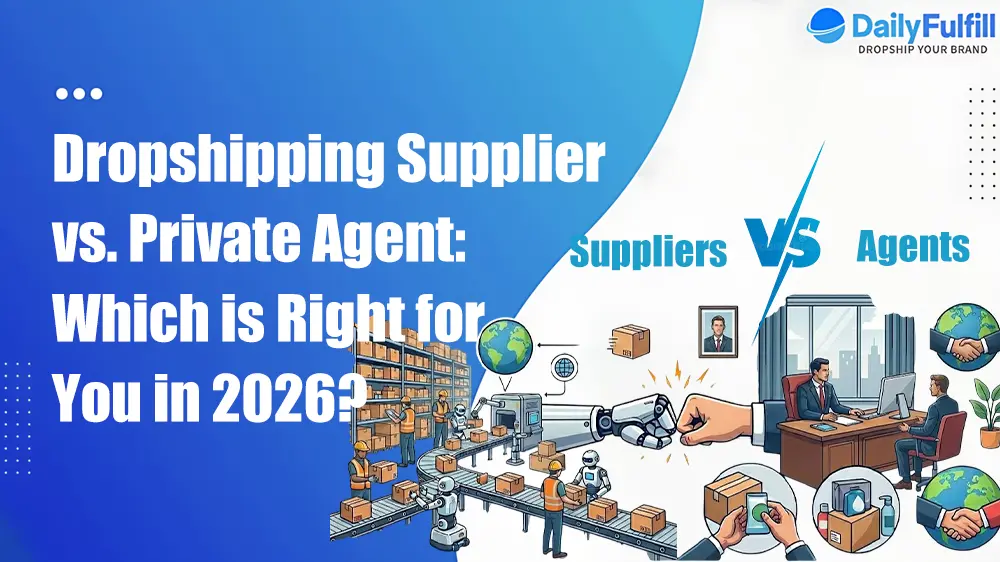
Dropshipping Supplier vs. Private Agent: Which Is Right For You In 2026?
Dropshipping Supplier vs. Private Agent: What is the difference? Discover which partner offers faster shipping, lower prices, and custom branding for your business in
Starting a dropshipping business in Germany in 2026 is more straightforward than most online guides make it sound — but it’s also less forgiving than starting one in less regulated markets. Germany has clear rules about business registration, VAT, product safety, and consumer protection. Get them right, and you have access to the EU’s largest e-commerce market. Get them wrong, and you face fines, customer complaints, and supplier problems that compound monthly.
This guide walks through the eight steps that actually matter, from picking a niche to handling returns. Each step is treated as a real operational decision, not a checklist item — because the choices you make in steps 1-3 (niche, registration, VAT setup) determine which suppliers and platforms will actually work for you in steps 4-7. Most guides treat supplier selection as something you tackle once, near the end. We’ll show why that thinking is what causes 80% of new German dropshipping stores to fail in their first year.
Yes — but it’s not the gold rush some guides describe. Germany is the largest e-commerce market in the EU, with online retail revenue projected to exceed €100 billion in 2026 and roughly 65 million online shoppers. Average annual spending per online shopper is among the highest in Europe at €2,200+. The market is real, the buyer pool is real, and demand for cross-border products is genuinely strong.
The structural advantages favor patient operators. German consumers spend more per order than American or Eastern European buyers, return rates in non-fashion categories are lower than the EU average, and brand loyalty is unusually strong once you’ve earned trust. A well-run German store with consistent quality and fast shipping can build recurring customer relationships that price-driven AliExpress flippers cannot.
The structural challenges are equally real. Customer acquisition costs are higher than in the UK or US, the regulatory environment penalizes shortcuts (VAT, GPSR, Impressum, GDPR — all enforced), and German buyers are quick to leave negative reviews when shipping or product quality disappoints.
Most stores that fail in Germany don’t fail because the market is hard — they fail because the operators treat it like a less regulated market and discover too late that German customers and German tax authorities both notice.
Niche selection in Germany matters more than in less regulated markets, because some categories carry compliance overhead that compounds quickly with scale. The best niches combine genuine local demand with manageable regulatory exposure.
Pet supplies — Germany has one of the highest pet ownership rates in Europe, and German pet owners spend disproportionately on quality products (orthopedic beds, premium food accessories, training gear)
Sustainable and eco-conscious goods — Nachhaltigkeit (sustainability) is a genuine purchase driver, not a marketing buzzword in Germany; reusable, biodegradable, and EU-made positioning converts well
Cycling and outdoor accessories — Germany has a deep cycling culture; accessories, e-bike add-ons, and outdoor gear are evergreen categories
Home and interior products — German consumers invest heavily in home aesthetics; Bauhaus-influenced, minimalist, and wellness-oriented home goods perform consistently
Pet, kitchen, and home automation niches — practical problem-solvers with clear utility convert better than novelty items
Electronics under €150 carry significant GPSR liability and chargeback fraud risk; cosmetics and supplements require additional regulatory compliance (CPNP, food safety registrations); children’s products face strict safety certification requirements that most dropshipping suppliers can’t fulfill.
A practical rule: avoid any niche where a product safety failure could trigger a recall — your supplier’s GPSR documentation capability becomes your legal protection. This is also where Step 4 (supplier choice) starts to matter even at this early stage. Niches with high compliance overhead require suppliers who can produce CE certification, factory traceability, and EU-compliant labeling. If your chosen niche needs all three, marketplace platforms with rotating agents are not viable from day one.
Before you take a single order, you need to register your business with your local Gewerbeamt (trade office). This is non-negotiable if you’re a German tax resident operating any commercial dropshipping activity — regardless of revenue. Operating without registration is treated as Schwarzarbeit (illegal work) and carries fines plus back-tax liability.
The registration process itself is straightforward:
Where: your local Gewerbeamt (in person or, in many municipalities, online)
Cost: €15-65 depending on the city
Timeline: typically processed within a few days to two weeks
What you receive: a Gewerbeschein (trade license) and, separately, a Steuernummer (tax number) issued by the Finanzamt within 4-6 weeks
What you’ll need: ID, proof of address, and a description of your business activity (use “Online-Einzelhandel” or “E-Commerce” rather than “Dropshipping” — the term is unfamiliar to many tax officials)
The Kleinunternehmerregelung question. German tax law lets businesses with annual revenue under €25,000 (raised from €22,000 in 2025) opt out of charging VAT — the small business exemption. For dropshippers selling cross-border within the EU, this exemption usually creates more complexity than it saves, because OSS reporting still applies above €10,000 in cross-border sales. Most serious dropshippers register for VAT from day one.
If you’re not a German tax resident (US, UK, China, or Hong Kong company), you don’t need a German Gewerbeanmeldung — but you’ll need an EU-based fiscal representative for VAT obligations and, depending on volume, registration in countries where you store inventory. This complicates supplier choice significantly.
VAT compliance is where most new German dropshipping stores create their first serious problem — usually within their first 90 days. The basics: Germany applies a 19% standard VAT rate (7% for specific categories like books and food). You must register for VAT once your domestic revenue exceeds €25,000 annually, or immediately if you store inventory in any EU country.
IOSS (Import One-Stop Shop) collects VAT at checkout for orders under €150 shipped from outside the EU (China to Germany, etc.) — without it, your customer pays VAT plus a courier handling fee at their door, which destroys reviews.
OSS (One-Stop Shop) handles intra-EU sales above €10,000 cross-border annually, letting you report all EU B2C sales through a single quarterly return rather than registering in each destination country.
The single most important thing to get right at this stage: your supplier’s IOSS handling capability determines whether your VAT setup actually works in practice. Charging VAT correctly at checkout is meaningless if the IOSS number doesn’t accompany the shipment to customs. Before committing to any supplier, ask explicitly how they handle IOSS for orders under €150 and DDP shipping for orders above. We cover this in detail in our complete VAT, IOSS, and tax compliance guide for German dropshippers →.
There’s a major change landing in 2026 that most guides haven’t caught up to, and it affects every China-to-Germany order you ship. From 1 July 2026, the EU is removing the €150 customs-duty exemption that previously let low-value parcels enter duty-free. In its place, a flat €3 customs duty applies per item (per tariff classification) on goods valued at €150 or less imported from outside the EU.
The detail that catches sellers off guard: this duty applies even if you’re fully IOSS-compliant. IOSS handles VAT — but the €3 duty is a separate customs charge, so doing your VAT correctly no longer means your low-value parcels enter duty-free. And it’s only the first step: a further €2 handling fee per declaration line is expected from 1 November 2026, bringing the combined charge to roughly €5 per item once both are in force. It’s an interim measure ahead of the EU’s broader customs reform later this decade.
What this means for you: every low-value item you ship directly from China to Germany now carries a new per-item cost on top of VAT — and because it’s charged per tariff line, a parcel with several different product types can incur the charge more than once. Build it into your pricing from the start, and make sure your supplier handles it cleanly at customs so your customer isn’t billed at the door. It also sharpens the case for pre-stocking your best sellers in an EU warehouse — importing in bulk once spreads this cost across many units instead of paying it on every single parcel. We break down the full mechanics, IOSS interaction, and how to handle it in our German dropshipping VAT, IOSS & tax guide.
Supplier choice is the decision that most directly determines whether your store survives its first year. Three operational models dominate the German market, each suited to different stages of business:
China-direct marketplace platforms (CJ Dropshipping and similar) — self-serve, free to use, enormous catalogs, minimum effort to launch. Best for sellers under 5 orders per day still testing winning products. The trade-offs are rotating agents, inconsistent QC, and Q4 support delays that surface as soon as you try to scale.
China-direct dedicated agent services — a single account manager handles your sourcing, packaging, fulfillment, and IOSS-compliant shipping. Higher onboarding friction (1-2 weeks to integrate), but the operational consistency and factory-direct pricing protect both your margins and your reviews once you’re shipping consistently. Best for sellers above 5 orders per day, especially those building a brand for the European market.
EU-based supplier networks (Spocket, Hertwill, AppScenic) — products ship from EU warehouses, no customs complexity, 2-7 day delivery. The trade-off is smaller catalogs, retail-adjacent pricing, and limited customization. Best when your brand strategy is built around “EU-made” or “ships from Europe” as a positioning angle.
Most successful German dropshippers use a hybrid approach: marketplace platforms during product testing, then a dedicated agent service once they’ve validated. We compare 8 specific suppliers (CJ, DailyFulfill, Spocket, AppScenic, BrandsGateway, Hertwill, Printful, AutoDS) in detail, with pricing, EU warehouse coverage, IOSS handling, and seller-stage fit, in our best dropshipping suppliers in Germany guide →.
Both Shopify and WooCommerce work well for German dropshipping operations. Shopify wins on speed-to-launch and integration with most dropshipping suppliers; WooCommerce wins on customization and avoids monthly subscription fees. Either platform handles VAT calculation, OSS reporting, and German-language storefronts adequately once configured — the platform itself is rarely the limiting factor.
What matters far more is the four legally required pages every German online store must have, in German:
Impressum — legal disclosure with your full business name, address, contact, and registration details (required by §5 TMG; missing it is one of the most common reasons for Abmahnung warnings from competitors and consumer protection groups)
Datenschutzerklärung — privacy policy compliant with GDPR, listing every data processor your site uses (analytics, ads, payment providers)
AGB (Allgemeine Geschäftsbedingungen) — your terms and conditions, including delivery timelines, payment terms, and liability limits
Widerrufsbelehrung — the legally mandated 14-day return rights notice with exact wording specified by law (deviating from the standard text invalidates the whole notice)
Both your storefront and these four pages must be in German. English-only stores face Abmahnung risk and lose conversions — German consumers expect to read terms in their own language. Most successful German dropshipping stores either start fully bilingual or German-only from day one, rather than retrofitting localization later.
Shipping is where customer experience either wins or breaks.
Standard shipping from China to Germany takes 7-14 business days using consolidated lines (4PX, Yun Express, Cainiao).
Express options (DHL Express, FedEx) cut this to 3-5 days but cost significantly more — usually only economical for products with high average order value.
The hybrid model — sourcing from China but pre-stocking fast-moving SKUs in an EU warehouse — has become the standard for serious German dropshipping operations above 10 orders per day. Pre-stocked inventory ships in 1-3 days within Germany using DHL or DPD, eliminating customs delays and matching what German consumers expect from Amazon Prime.
This is also why the hybrid model matters more from mid-2026 onward: with the EU’s new €3-per-item import duty (and a further €2 handling fee expected in November) hitting every low-value parcel sent directly from China, pre-stocking fast movers in an EU warehouse doesn’t just cut delivery time — it spreads that new per-parcel customs cost across a single bulk import. We cover the cost math in our shipping from China to Germany guide.
Returns are the hidden cost most new dropshippers miss. Shipping a returned product from Germany back to China typically costs more than the product itself, which is why most dedicated agent services handle returns either through EU-based return addresses or by writing off the product cost on low-value items. Plan your return policy around this constraint from day one.
We cover shipping methods, costs, and EU warehouse strategy in detail in our shipping from China to Germany guide →.
German marketing channels look similar to other Western markets but behave differently in practice. Meta (Facebook + Instagram) and Google Ads remain the dominant performance channels, with TikTok growing fast among younger demographics. Customer acquisition costs are typically 20-40% higher than in the UK or US — German users are more skeptical of paid ads, click less impulsively, and convert later in the funnel.
Trust signals matter disproportionately. Trustpilot and Trusted Shops badges, GDPR-compliant cookie banners, transparent shipping and return information, and visible Impressum links measurably affect conversion rates. German buyers research before purchasing in ways that American buyers often skip — your product page, FAQ depth, and social proof carry more weight than ad creative.
Ad copy and product descriptions must be in German, not English-translated-by-Google — clumsy translations are visible and damage trust immediately.
Avoid hyperbolic claims (“best ever,” “limited time only,” excessive emojis) which read as American marketing tropes and underperform in German markets. Calm, specific, factual messaging consistently outperforms aggressive scarcity tactics with German buyers.
German consumers have a legal right to return any online purchase within 14 days, no questions asked, with the seller covering return shipping in most cases. This is the Widerrufsrecht (right of withdrawal), and the rules are non-negotiable. Trying to limit returns through restrictive policies — short windows, restocking fees, “final sale” labels — is illegal under German law and will trigger Abmahnung warnings within weeks.
Build your return logistics into your operating model from day one. Returning physical goods from Germany to China usually costs more than the product itself, which is why most experienced sellers either operate an EU-based return address (handled by your fulfillment partner) or write off product cost on returns under €30 rather than ship them back. Whichever you choose, your supplier needs to be involved in the decision.
Customer service must be available in German for serious operations. English-only support measurably reduces conversion and raises return rates from misunderstanding. You don’t need 24/7 native German speakers from day one, but you need a workflow that responds in German within 24 hours during business days.
Track return reasons systematically — “wrong size” vs “quality issue” vs “didn’t match description” tells you whether your product page, supplier QC, or sourcing decisions need adjustment.
Most failures aren’t caused by bad products or weak marketing — they trace back to operational mistakes that compound over time. Here are the five we see most often:
Skipping Gewerbeanmeldung “until you’re making real money.” Operating an unregistered commercial business in Germany is illegal regardless of revenue, and tax authorities can backdate liability years. Register before your first order; the €15-65 cost is trivial compared to penalties.
Charging VAT at checkout without IOSS registration. Your Shopify is configured correctly, your customer pays VAT at checkout, then customs charges them again at the door. The customer pays twice, leaves a 1-star review, and you issue refunds. This is a supplier-side problem disguised as a tax problem — fix it by choosing a supplier who handles IOSS shipments correctly.
Locking in a supplier before validating products. New sellers often commit to a dedicated agent or pre-stock inventory before they know what sells. Test products on a marketplace platform first, then migrate to a dedicated supplier once you have consistent demand. Reverse this order, and you’ll either pay for capabilities you don’t use yet or be stuck with inventory of products that didn’t work.
Running an English-only or Google-translated German store. German consumers expect to shop in proper German, including the four legally required pages (Impressum, Datenschutz, AGB, Widerrufsbelehrung). Machine-translated copy is visible immediately and damages trust. Hire a native German copywriter for storefront content from launch.
Trying to limit returns with American-style policies. “Final sale,” restocking fees, or shortened return windows are illegal under German law. The 14-day Widerrufsrecht is non-negotiable. Build your return logistics around accepting it efficiently rather than trying to avoid it — that’s where your supplier choice (EU return address, write-offs on low-value items) makes a real margin difference.
The eight steps above aren’t sequential — they’re interconnected. Your niche choice constrains your supplier options. Your supplier capability determines your VAT and shipping reality. Your store setup affects your customer service workflow. The sellers who succeed in Germany treat this as a single integrated decision, not a checklist.
If you’ve reached the stage where you’ve validated products and operational quality is starting to matter more than catalog access, DailyFulfill provides dedicated agent fulfillment for European sellers →. We work with stores processing 5+ orders per day. If you’re earlier in your journey, the platforms we mentioned above will serve you better while you validate your products.
A realistic minimum is €1,000-2,500 to launch properly. This covers Gewerbeanmeldung (€15-65), Shopify or WooCommerce setup, your first product testing budget on Meta or Google Ads (€500-1,500), German-language store content (a native copywriter is non-optional), and basic legal pages template. Sellers starting with less than €1,000 typically run out of testing budget before validating any product, then quit. Plan for at least 3-6 months of runway before profitability — Germany rewards patience.
It depends on your stage and product strategy. EU suppliers (Spocket, Hertwill, AppScenic) offer 2-7 day delivery and no IOSS complexity, but smaller catalogs and retail-adjacent pricing. China-based suppliers (CJ, dedicated agent services) offer factory-direct pricing and unlimited catalog breadth, but require IOSS handling and longer shipping unless you pre-stock to an EU warehouse. Most successful German dropshippers use a hybrid approach — China sourcing for catalog and margin, EU warehousing for speed.
Both work well; the choice depends on your priorities. Shopify wins on speed-to-launch, supplier app integrations, and ongoing maintenance — most dropshipping fulfillment partners integrate natively. WooCommerce wins on customization flexibility and avoids Shopify’s monthly subscription. Either platform handles VAT calculation, OSS reporting, and German-language storefronts adequately. The platform itself rarely determines success — your supplier choice and compliance setup matter far more.
No, but your store does. You can operate the business from anywhere as a non-EU entity, but your storefront, customer service, and four legal pages (Impressum, Datenschutz, AGB, Widerrufsbelehrung) must be in proper German — not Google-translated. Hire a native German copywriter for storefront content and either a freelance German VA or AI-assisted workflow for customer service. English-only operations measurably underperform in the German market and create legal exposure.
Realistic expectations: 3-6 months to find a winning product, 6-12 months to reach consistent profitability, and 12-18 months to build a brand worth scaling. German markets reward patience and quality over speed — sellers who hit €5,000-10,000/month within 6 months typically did extensive product validation and built operational discipline before launching. If you’re looking for fast-flip dropshipping, German market regulations and consumer expectations will frustrate you within weeks.
Learn dropshipping tips, sourcing strategies and fulfillment insights from DailyFulfill
Dropshipping Supplier vs. Private Agent: What is the difference? Discover which partner offers faster shipping, lower prices, and custom branding for your business in
Hitting 300+ orders a day on CJDropshipping? See when a private dropshipping agent saves more money, ships faster, and gives you real control in 2026.
CJ Dropshipping claims 7–15 day shipping to the US and EU. Real seller data tells a different story. See actual delivery times, delays, and faster options.