
 English
 Français
 Deutsch
 Nederlands
How To Deal With Lost Packages In Dropshipping (2026 Guide)
What do you do when a customer says their package is missing? Learn how to reply, how to avoid PayPal bans, and how to stop losing money on lost packages.
Nobody launches a dropshipping store thinking about returns.
You think about products. You think about ads. You think about that first sale notification. Returns? That’s a problem for future you.
Then future you arrives — and it’s expensive.
The average ecommerce return rate in 2025 is approximately 24.5%, according to Capital One Shopping. For dropshipping specifically, return rates hover between 5% and 8%. For fashion and clothing — one of the most popular dropshipping niches — rates run 20–30%.
That means if you sell 200 orders this month, somewhere between 10 and 60 customers will want their money back. Not because you did anything wrong. That’s just how ecommerce works.
This guide covers the real return process for every major dropshipping supplier type — US retailers, Chinese marketplaces, fulfillment platforms, and private agents. We’ll show the actual costs, the fine print nobody reads, and the one strategy that most sellers ignore: preventing returns before they happen.
We are DailyFulfill, a fulfillment agent. We process thousands of dropshipping orders per week and deal with the return side of every supplier type below. This isn’t theory. This is what we see every day.
Who this applies to: Sellers using AutoDS, DSers, or manually purchasing from US retailers and shipping to customers.
This is the best-case return scenario in dropshipping. US retail platforms have customer-friendly return policies because they have to — they’re competing against each other for consumer trust.
How it works:
Your customer wants a refund. The product originally came from Amazon (or Walmart, or Target). You initiate a return through the retailer’s system. The customer ships the item to an Amazon return center (or Walmart store, etc.). The retailer refunds the buyer account you used to purchase the item. You then manually refund your customer from your Shopify or store dashboard.
The process works. But there are two dropshipper-specific problems:
Problem 1: Brand exposure. The return label shows Amazon’s (or Walmart’s) branding. Your customer sees this and realizes their $29.99 purchase came from Amazon where it costs $14.99. They feel cheated. They don’t come back. Worse — some post about it on social media.
Problem 2: Account risk at scale. US retailers are designed for normal consumers, not bulk dropshippers. When you place 50–200 orders per month through a single buyer account — all shipping to different addresses — the platform’s fraud detection may flag your activity. Multiple sellers on review platforms like Capterra report buyer accounts being restricted or suspended, sometimes with pending refunds stuck in limbo.
Typical cost per return: Low — the retailer absorbs most of the logistics cost. Your main loss is the profit margin on that order, plus the payment processing fee you don’t get back (~$0.30–$1.00). But the brand damage is the real cost — it’s invisible on your spreadsheet but very real on your repeat purchase rate.
When this works well: Low-volume stores (under 50 orders/month) where account flagging risk is low and fast returns keep customers happy.
Who this applies to: The majority of dropshippers worldwide. If you source cheap products directly from Chinese marketplaces — whether through automation tools, browser extensions, or manual ordering — this is your return reality.
This is where most sellers lose real money.
The core problem: Most Chinese suppliers are 7,000+ miles from your customer. Returning a product from the US or Europe to China costs $15–$40 in shipping — often 2–3x the product’s value.
Here’s the math every AliExpress dropshipper eventually faces:
The scenario: Customer paid you $19.99 for a kitchen gadget. You bought it from AliExpress for $6.50.
Option A: Ask customer to return it to China. Return shipping: ~$20. For a $6.50 product. Nobody does this.
Option B: Open a dispute with the AliExpress seller. Timeline: 15–30 days. Your customer won’t wait that long. If they file a PayPal dispute or credit card chargeback first, the payment processor sides with the buyer — you lose the money plus a ~$20 chargeback fee.
Option C (what most sellers actually do): Refund and tell the customer to keep it. Your loss: $6.50 (product cost) + $19.99 (refund) + ~$1.00 (payment fee you don’t get back) = ~$27.50 total.
Option C is the industry standard for low-value Chinese-sourced returns. It’s cheaper than fighting. But at 10 returns per month, that’s $275/month — silently draining your profit every single month.
The AliExpress dispute process is slow and frustrating. You submit evidence (photos of the defect + proof of customer complaint). The seller has 5 days to respond. If they reject your claim, AliExpress mediates — adding another 7–15 days. For a $6 product, most sellers give up before the dispute resolves.
1688 and Alibaba are even harder because these platforms are designed for B2B wholesale, not individual order disputes. Return policies vary by supplier, there’s no standardized dispute system like AliExpress, and communication is primarily in Chinese.
Typical cost per return: $15–$30 in direct losses per incident (refund + lost product), plus your time handling the complaint. No path to recovering the product.
When this works: Honestly, it “works” in the sense that it’s the cost of doing business with cheap Chinese suppliers. The way to manage it is to price the losses in (see the “return cushion” section below) and minimize defects through better supplier selection or quality inspection.
Who this applies to: Sellers using all-in-one dropshipping platforms that source, warehouse, and ship products on your behalf.
These platforms sit between you and the factory. They have formal return policies — which is a step above raw AliExpress sourcing. But “having a policy” and “having a smooth process” are two very different things.
The general pattern across fulfillment platforms:
Most platforms offer refunds or replacements for defective or incorrect products — if you provide photo/video evidence and a screenshot of the customer’s complaint. Processing typically takes 5–10 business days, though sellers report it stretching longer during peak seasons.
Most platforms reject “buyer’s remorse” disputes — if the customer simply changed their mind or didn’t like the product, you’re on your own.
Return shipping from the US/Europe back to the platform’s China warehouse costs $15–$30 — and most platforms issue a store credit, not a cash refund. For low-value products, this makes physical returns impractical.
Platform-specific details that matter:
CJDropshipping has a critical fine-print distinction: they separate products from their own inventory vs “service products” (items CJ sourced from external suppliers on your behalf). For service products, CJ’s dispute policy explicitly states they may not accept quality-related disputes because the original supplier is not CJ. Many sellers discover this only after filing their first dispute. CJ’s quality guarantee is strongest for products stocked in their own warehouses — weakest for custom-sourced items.
Spocket focuses on US/EU suppliers with generally higher product quality, which means fewer defect-related returns. But their product prices are higher, so when a return does happen, the margin loss is larger.
Zendrop offers a return management feature through their dashboard, which is more structured than most platforms. But sellers report that refund processing can take time, and the logistics of physical returns remain complex for China-sourced items.
Real seller experiences across platforms: On Sitejabber, a CJ seller with $43,000+ in purchases described an order that CJ never shipped due to an alleged address issue. When the address was verified as correct, the resolution took 18 days. On Trustpilot, multiple sellers across platforms describe a common pattern: wrong product shipped → platform initially insists the correct item was sent → weeks of escalation → eventual acknowledgment.
Typical cost per return: $10–$25 per incident. Better than raw AliExpress (the platform handles some logistics), but the fine print exceptions and timezone-based support delays add friction.
When this works well: Medium-volume stores (50–300 orders/month) where the platform’s QC catches some defects and the dispute process — while imperfect — is at least structured.
Who this applies to: Sellers working with a dedicated fulfillment agent (like DailyFulfill) or a third-party logistics provider (3PL) that handles sourcing, inspection, and shipping.
This scenario flips the return equation. Instead of dealing with returns after they happen, the agent model focuses on preventing returns before the product ships.
How it works differently:
Before products enter storage: The agent inspects incoming batches using AQL sampling (the international standard, ISO 2859-1, used by Walmart, Amazon, and Target). For a batch of 500 units, this means pulling 50 random samples and checking for defects — correct color, correct size, functional quality, packaging integrity. If there are too many bad items threshold, the batch goes back to the factory for replacement. Your customer never sees the defective product.
Before each order ships: The agent photographs the actual product being packed. These photos are timestamped and available in your dashboard. If a customer later claims “I received the wrong item,” you have visual proof of exactly what was shipped. This resolves disputes in hours instead of weeks — and protects you from fraudulent chargeback claims.
When a return does happen (because some returns are unavoidable — buyer’s remorse, wrong size selected,buyers just change their minds the agent typically has a local or regional return address, so the customer doesn’t need to ship to China. The returned product goes back into your inventory for re-fulfillment.
Typical cost per return: Much lower — because most defect-related returns are prevented before shipping. The returns that do happen (buyer’s remorse, sizing issues) are handled with less friction because local return addresses exist.
When this works well: High-volume stores (300+ orders/month) where the per-unit savings from factory-direct pricing and the reduced return rate from QC inspections compound into significant monthly impact. At DailyFulfill, our clients typically see defect-related return rates drop from the industry average of 5–8% to roughly 1–3% after implementing AQL inspections.
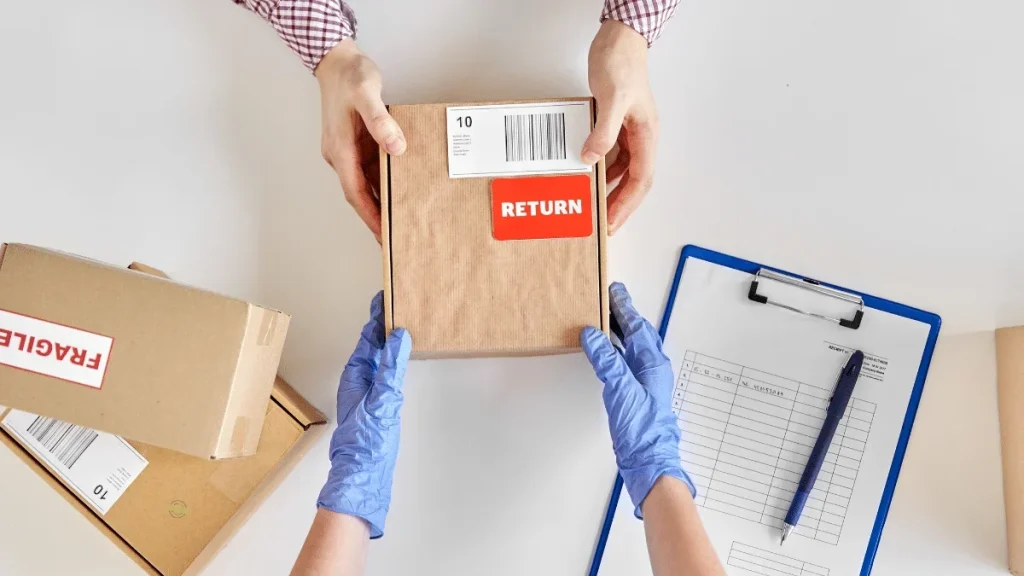
Many buyers ask for their money back just because of how the package looks outside. When you use normal Chinese suppliers, they pack your item in a dirty, ugly grey bag. Even if the product inside is perfectly fine, the buyer opens the mailbox, sees the ugly grey bag, and thinks: “This looks cheap. I bought a bad product.” They feel cheated, so they ask for a refund.
How we fix it: At DailyFulfill, we throw away the ugly grey bags. We can pack your items in nice, clean custom boxes and even put your store logo on them. When buyers receive a beautiful box, they feel like they bought from a real, high-end brand. They stay happy, and they keep the product.
When shipping takes 20 to 30 days, buyers get nervous. But what makes them really angry are fake tracking numbers. Many cheap suppliers give you a tracking link that never updates. The buyer checks the link, sees nothing moving for weeks, and thinks you stole their money. They don’t even wait for the product—they go straight to PayPal or their credit card company and take their money back. You lose the sale, lose the product, and pay a $20 penalty fee to the bank.
How we fix it: We use fast 6-10 day shipping lines to the US and Europe. More importantly, we give you a real tracking number that updates every single step of the way. Your buyers can see exactly where their package is at any time (you can even connect it to your own store’s tracking page). Because the shipping is fast and the tracking is real, buyers feel safe and never open angry PayPal disputes.
Most dropshippers never calculate return costs before launching. Here’s a simple model:
Assumptions:
- 200 orders/month, average selling price $29.99
- Product cost (including shipping to customer): $12.00
- Gross profit per order: $17.99
- Return rate: 8% (conservative)
- Average loss per return: ~$15 (refund + product + payment fee + your time)
Monthly return cost: 200 × 8% = 16 returns × $15 = $240/month That’s 6.7% of gross profit — gone.
For fashion sellers (return rates 20–30%):
200 × 20% = 40 returns × $15 = $600/month = 16.7% of gross profit
How QC level affects these numbers:
| QC Level | Who Does It | Estimated Defect Return Rate | Monthly Returns (on 200 orders) | Monthly Loss |
|---|---|---|---|---|
| No QC | Nobody (direct from AliExpress/Amazon) | ~8% | 16 | $240 |
| Basic QC | Platform warehouse worker | ~4% | 8 | $120 |
| AQL Inspection | Trained inspector (agent/3PL) | ~2% | 4 | $60 |
Estimates assume defects are the primary return driver. Buyer’s remorse and sizing returns happen regardless of QC.
The savings from “no QC” to “AQL inspection” = $180/month in direct return costs. Add avoided 1-star reviews, avoided chargebacks ($20 fee each), and higher customer lifetime value — the real impact is significantly more.
These apply whether you use AliExpress, CJ, Spocket, an agent, or anything else.
Rule 1: Price in the “return cushion” from day one. Add 5–10% to your target profit margin. If you want 30% net, price for 35–40% gross. This one adjustment prevents the slowly losing money without knowing it.
Rule 2: For products under $15, refund and let the customer keep it. Processing a return (your time + shipping + restocking) almost always costs more than the product. Write it off. Move on.
Rule 3: Always require a photo before issuing a refund. This confirms the defect is real (some returns are fraudulent), gives you evidence for supplier disputes, and discourages frivolous returns.
Rule 4: Publish a clear return policy before your first sale. Keep it simple: “If your product arrives damaged or isn’t what you ordered, contact us within 14 days with a photo. We’ll issue a full refund or send a replacement.” This manages expectations and reduces disputes.
Rule 5: Track your return rate by product, not just overall. If one product consistently hits 15%+ returns, it’s not a return problem — it’s a product or supplier problem. Drop it or switch suppliers before it drags down your store’s reputation.
| Factor | US Retail (Amazon, Walmart) | Chinese Direct (AliExpress, 1688) | Fulfillment Platform (CJ, Spocket, Zendrop) | Private Agent / 3PL |
|---|---|---|---|---|
| Return process exists? | Yes — retailer handles logistics | Dispute system only | Yes — but read the fine print | Yes — local returns possible |
| Typical resolution time | 3–7 days | 15–30 days | 5–10 business days | Hours (if caught before shipping) |
| Physical return practical? | Yes (domestic) | No (too expensive) | Rarely (China warehouse) | Often (regional return address) |
| Cost per return incident | Low ($1–$5 net loss) | High ($15–$30) | Medium ($10–$25) | Low (most defects prevented) |
| Brand exposure risk | High (customer sees Amazon/Walmart) | Low | Low | None |
| Quality control before shipping | None from you | None | Basic visual check | AQL inspection + photo proof |
| Photo proof of packed order? | No | No | No | Yes |
| Best for | Low volume, US market | Budget testing | Medium volume | High volume, brand builders |
The bottom line: Returns are a predictable, calculable cost — not a surprise. You can’t eliminate them, but you can reduce them with quality control, price them in with the return cushion, and handle them efficiently with clear policies and photo requirements.
The sellers who lose money on returns are the ones who didn’t plan for them.
If you’ve read this far, you already know more about returns than 90% of dropshippers. But knowing is not the same as doing. Before your next order ships, take thirty minutes and do three things:
Audit your current return rate. Pull your last 100 orders and count the refunds, chargebacks, and “where is my order” messages. That’s your real return cost — not the number your supplier shows you.
Write a return policy you can actually enforce. Not copy-pasted from another store. One that matches how your supplier actually operates. If you’re still figuring out the fulfillment side, our guide on how dropshipping shipping actually works breaks down the full journey from factory to customer — which is where most return problems start.
Build return prevention into your supplier choice. A supplier that photographs every order before it ships will save you more money than any return policy ever will. That’s not a sales pitch — it’s just math. A $2 QC check prevents a $25 refund.
If you want to see what return-proof fulfillment looks like in practice — AQL inspection, photo proof of every packed order, regional return addresses in the US and EU — get a free cost comparison and we’ll break down the real per-order cost for your products. No commitment, no pushy sales call. Just the numbers.
Returns are not the enemy. Bad planning is.
Here are the most common questions buyers and sellers ask about ring sizes.
First, always ask the buyer to send a photo of the broken item. If the product is very cheap (like under $15), do not ask them to send it back. Just click “Refund” in your Shopify dashboard and tell them to keep it. If it is an expensive item, talk to your supplier or your private agent (like DailyFulfill) to see if you can send it to a local return address.
It depends on who ships your orders. If you buy from AliExpress, the item must go all the way back to China, which costs too much money. If you work with a private agent like DailyFulfill, the item can go to a local return warehouse in the US or Europe. But most of the time, for cheap items, the return goes nowhere—the buyer just throws it in the trash after you give them their money back.
You decide this in your store’s Return Policy. But in real life, if the factory sent a broken item or the wrong color, you (the seller) have to lose the money and pay for it. If the buyer just changes their mind and doesn’t want it anymore, you can tell the buyer to pay the shipping fee to send it back.
Learn dropshipping tips, sourcing strategies and fulfillment insights from DailyFulfill
What do you do when a customer says their package is missing? Learn how to reply, how to avoid PayPal bans, and how to stop losing money on lost packages.
Do your customers know you dropship from China? Learn how to hide Chinese tracking, remove factory invoices, and look like a real US or UK brand.
Is your tracking number not working? Are your customers angry? Learn the secret of “two tracking numbers” and the best way to track dropshipping orders from China.