If you’re researching dropshipping fulfillment partners in 2026, you’ve probably come across both DailyFulfill and HyperSKU — two China-based fulfillment companies that often appear in the same shortlists. The two services overlap on the surface, but they operate with meaningfully different sourcing models, shipping networks, and pricing transparency.
This article is an honest, side-by-side comparison built from publicly verifiable data: each company’s official website, third-party review platforms, and operational disclosures. We’ve tried to keep the marketing language to a minimum and let the numbers do the talking — including in the places where HyperSKU outperforms us. If you’re going to trust a partner with your customers’ orders, you deserve a comparison you can actually verify.
Company Snapshots — Side by Side
Before we get into specific service categories, here’s a baseline comparison of what each company publicly discloses about itself. Every figure in the DailyFulfill column is verifiable on dailyfulfill.com or our public Trustpilot page; every figure in the HyperSKU column is taken from hypersku.com or their Shopify App Store listing.
Both companies operate at similar scale and were founded around the same period. The most meaningful difference at this layer is how much of their operational data they publish openly. DailyFulfill discloses warehouse square footage, active store count, country coverage, factory network size, and named leadership; HyperSKU is selective about which figures it publishes, which makes apples-to-apples comparison harder for buyers doing due diligence.
Sourcing Models — Two Different Philosophies
This is where the two companies diverge most clearly, and it’s the single most important question to answer before choosing between them.
HyperSKU: Catalog-Driven Sourcing
HyperSKU’s model centers on a curated product catalog — they advertise access to 1M+ products across 10+ categories. Sellers browse this catalog, import products into their store, and rely on HyperSKU’s pre-vetted supplier network. This works well for:
- Brand-new sellers who haven’t yet identified winning products
- Sellers who want to test multiple SKUs without separate supplier conversations
- Print-on-demand and merchandise-style stores
DailyFulfill: Winning-Product Sourcing
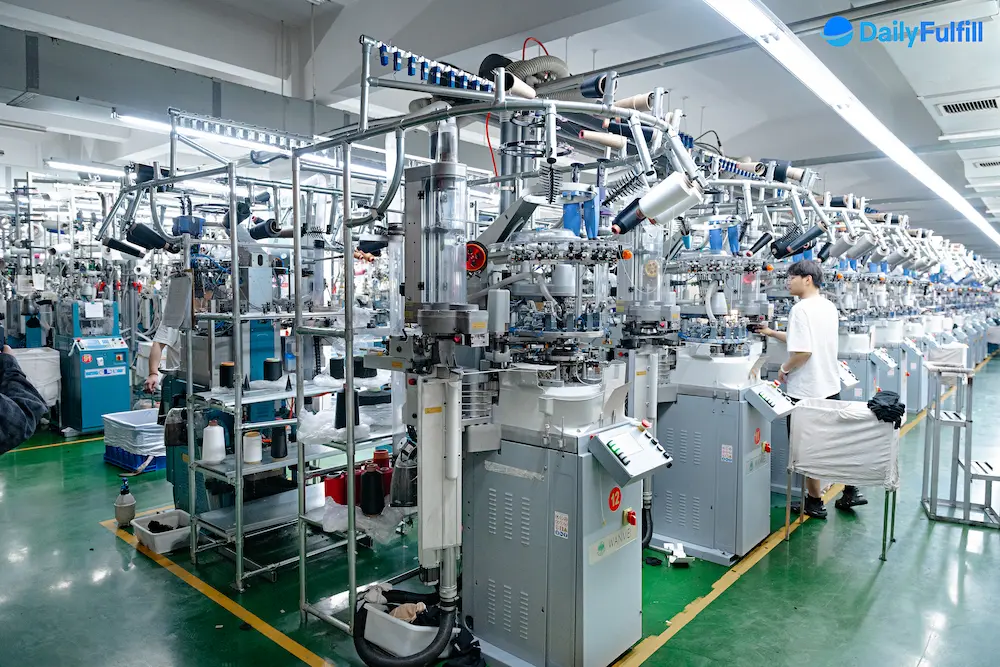
DailyFulfill’s model is the inverse: you bring the product URL — we find the factory. Most of our active stores are already running paid traffic on Facebook, TikTok, or Google Shopping and need a sourcing partner who can secure factory-direct pricing on the specific SKU they’re already selling. Through our network of 2,000+ partner factories (concentrated around Yiwu and Guangzhou), we typically:
- Match an AliExpress, 1688, or Amazon listing to a direct manufacturer
- Negotiate per-piece pricing at factory tier rather than retail tier
- Handle quality inspection and bulk stocking before fulfillment begins
The honest framing: If you don’t yet know what you’re going to sell, HyperSKU’s catalog gives you a starting point. If you already know what’s working and need pricing and reliability at scale, DailyFulfill’s sourcing model is built for you. Neither model is universally better — they fit different stages.
Shipping Speed — Where the Numbers Tell a Clear Story
Shipping time is the easiest claim to verify because every fulfillment company publishes their own delivery windows. Here’s what each company states publicly on their own websites:
The EU window is where the gap is most pronounced. DailyFulfill’s 3–8 day EU window comes from optimized line-haul routing through European entry hubs — a result of years of channel testing with carriers like YunExpress, 4PX, and SF Express on EU lanes. HyperSKU’s published 7–12 day window suggests they may rely on more conservative postal-injection methods for EU-bound parcels.
HyperSKU does have one structural advantage worth acknowledging: they operate more overseas warehouses (China + US + EU). For sellers who want to pre-stock inventory locally rather than ship cross-border for each order, that infrastructure can be useful. The question is whether your unit economics support pre-stocking — for most dropshippers doing under 500 orders/day, cross-border line-haul still wins on cost per parcel.
Quality Control & After-Sales Handling
A common (and inaccurate) characterization of DailyFulfill in competitor blog posts is that we operate as a “pass-through middleman” with no quality control. This isn’t supported by how we’re actually structured.
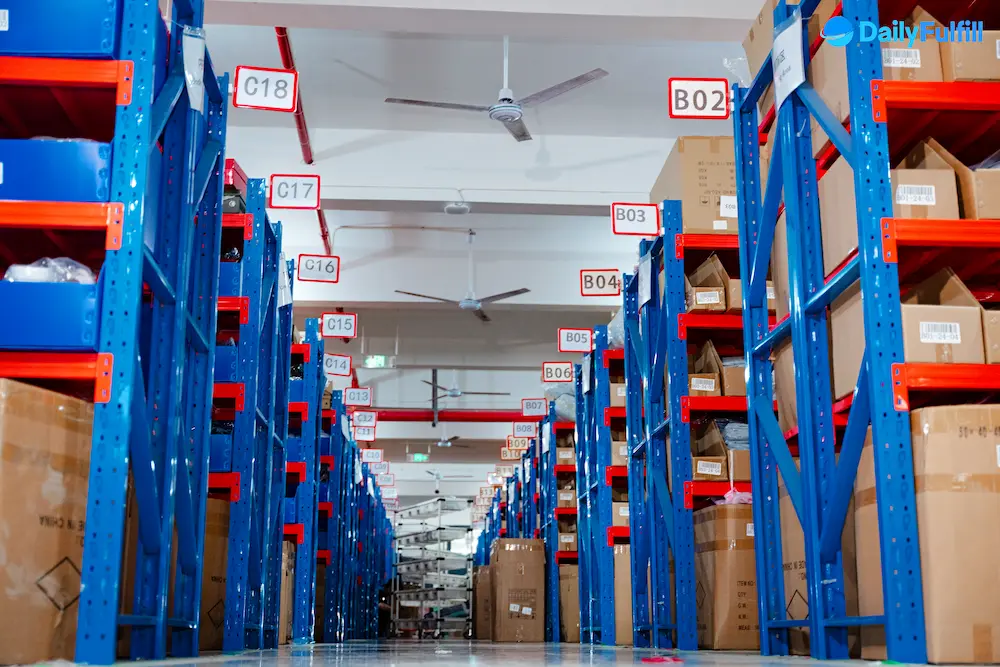
DailyFulfill runs two physical warehouses in Yiwu and Guangzhou totaling 5,000 sqm of operational floor space. Fulfillment operations are led by Iris, who oversees a three-round quality control process every order moves through before international shipment:
- Inbound QC — Every shipment from a partner factory is inspected on arrival before stock is accepted into the warehouse.
- Dedicated QC department inspection — A separate quality control team performs functional testing and defect screening on stocked SKUs.
- Packaging QC — A final inspection happens during pick-and-pack, immediately before the order is sealed for international shipment.
Beyond warehouse QC, Mia leads logistics — carrier relationships, route optimization, and the cross-border shipping work that produces our 3–8 day EU delivery window. Maya runs after-sales, handling dispute resolution, refunds, reshipments, and damaged-parcel claims directly with end customers. Stephen oversees factory audits and pre-production sample approval for new SKUs. The result is that issues get caught and resolved at four distinct stages — sourcing, inbound, packaging, and post-shipment — rather than only at the moment of shipment.
HyperSKU also performs warehouse-level quality inspection, but does not publicly disclose the structure of their QC process or the people leading it. The honest assessment: both companies operate real QC, but DailyFulfill’s three-stage process and named team accountability are documented in a way HyperSKU’s is not.
Custom Packaging & Branding
Both companies offer custom packaging — branded poly mailers, thank-you cards, custom boxes, branded inserts, logo printing. The difference is in pricing transparency.
DailyFulfill publishes pricing publicly: custom packaging starts from $0.10/pc, with tiered pricing based on quantity and material. You can see typical price ranges on our branding services page before you ever book a call.
HyperSKU offers custom packaging (their site lists “Custom packaging & inserts” as a value-added service) but does not publish per-unit pricing publicly — sellers need to consult with their assigned agent to get a quote.
For sellers comparing total unit economics across multiple suppliers, having published pricing matters. It makes it possible to model margin without booking a sales call.
Platform Integrations
Both DailyFulfill and HyperSKU support the two largest dropshipping segments — Shopify and TikTok Shop — and either company can serve sellers in those channels well. The meaningful differences appear in the specialized scenarios beyond these two mainstream platforms.
Beyond the high-volume segments, the two companies have built coverage in different directions. DailyFulfill extends into marketplace fulfillment scenarios with stricter compliance requirements — Etsy, Amazon FBM, and eBay — where most fulfillment providers cannot operate reliably. HyperSKU extends into the alternative storefront platforms — BigCommerce and Magento. For sellers running on Shopify, TikTok Shop, or WooCommerce (the largest combined slice of the market), both providers serve well; the deciding factor will be the rest of the comparison.
Where DailyFulfill Goes Beyond Generic Fulfillment: The Etsy Case
Etsy occupies an unusual position in the dropshipping ecosystem. The platform officially discourages dropshipping and actively closes stores that show signals of overseas pass-through fulfillment — wrong tracking origins, generic packaging, mismatched seller information, identical product imagery. For most fulfillment providers, this either means avoiding Etsy sellers entirely or accepting a meaningful rate of store closures among their Etsy clients.
Based on our internal records and after-sales data, DailyFulfill’s Etsy sellers do not experience meaningful rates of fulfillment-driven store closures. This isn’t accidental — we’ve engineered our Etsy fulfillment workflow specifically around the platform’s pain points:
- Branded tracking display — Customer tracking pages show the seller’s brand identity, not “Shipped from China.” The China fulfillment leg is removed from the customer-facing tracking timeline.
- Custom packaging and inserts — No generic supplier mailers. Orders ship in seller-branded packaging from $0.10/pc.
- Custom product photography — Professional white-background photos shot with the actual product, avoiding the “every Etsy listing uses the same stock photo” red flag the platform’s algorithm flags for review.
- Custom video production — Demo videos and creative assets for the listing and ad accounts.
- Private labeling — Logo printing on the product itself, not just the package.
This is the operational difference between a fulfillment service that ships boxes and a fulfillment partner that helps the seller stay on the platform. For Etsy sellers — and for any seller building a real brand on a marketplace that actively scrutinizes dropshipping operations — this matters more than shipping speed alone.
HyperSKU offers several of these services individually but has not (publicly) positioned itself around Etsy-specific fulfillment compliance.
Public Reviews & Independent Trust Signals
Where customer reviews are published matters as much as the score itself. Reviews on a company’s own integration platform (Shopify App Store, etc.) typically only capture sellers actively using that integration, which can skew positively. Independent third-party platforms like Trustpilot capture a broader slice including users who are no longer active.
- DailyFulfill: 4.9/5 across 456+ reviews on Trustpilot — an independent third-party review platform with no commercial relationship to either company
- HyperSKU: 4.9/5 on the Shopify App Store
Both ratings are strong. For buyers doing due diligence, we’d recommend reading reviews on whichever platform is most relevant to your use case, and weighing the independence of the platform itself.
Pricing Model
Both companies operate on the same basic model: no monthly subscription fees; revenue is built into product cost and shipping margin. This is the standard structure for China-based fulfillment companies in 2026 — neither company should be claiming “no monthly fees” as a unique advantage, because it’s table stakes for the category.
The pricing differences emerge in the line items you can model in advance:
- Custom packaging: DailyFulfill publishes from $0.10/pc; HyperSKU quote-based
- Shipping rates: Both quote per-SKU based on weight, dimensions, and destination
- Sourcing fees: Both bundle sourcing into product cost rather than charging separately
Who Should Choose Which? An Honest Recommendation
We don’t believe in pretending one fulfillment partner is right for every seller. Here’s where each company genuinely shines:
HyperSKU is likely a better fit if you:
- Are brand new to dropshipping and don’t yet have winning products identified
- Want to browse a large pre-built catalog rather than source specific SKUs
- Plan to pre-stock inventory in overseas warehouses (US/EU) and have the cash flow to support it
- Sell primarily on BigCommerce or Magento
- Need multilingual customer support (HyperSKU supports six languages)
DailyFulfill is likely a better fit if you:
- Are already running paid traffic and have identified products you know are winners
- Are doing 100+ orders/day and need factory-direct pricing on specific SKUs
- Sell into the EU and need the fastest possible cross-border delivery (3–8 days)
- Sell on Shopify, TikTok Shop, Amazon FBM, eBay, or WooCommerce
- Want transparent published pricing on custom packaging so you can model unit economics before booking a call
- Value direct access to a named, public leadership team and verifiable third-party reviews

 English
 Français
 Deutsch
 Nederlands
 Polski
 Español