
 English
 Français
 Deutsch
 Nederlands
 Polski
 Español

4PX Express Review 2026: Is It Safe For Dropshipping?
Should you use 4PX for dropshipping? Learn the real delivery times, the difference between Post Link and Special Line, and the biggest problem with 4PX customer service.

Most dropshippers pick a China shipping carrier the same way: one Reddit thread, one YouTube review, and a gut decision. Three months later, they’re stuck in a support ticket loop over a lost parcel, wondering if the other carrier would have been better.
At DailyFulfill, we route over 20,000 parcels a day through YunExpress, 4PX, and CNE Express — the same three carriers most independent sellers compare. When we sat down to write this comparison, we made a deliberate choice about data: we cite publicly published carrier service standards and independent tracking aggregator data, not our internal numbers.
The reason is worth explaining. Delivery times are ultimately set and controlled by the carriers themselves, not by us. When we publish a delivery time figure based on our internal data, the accountability for hitting that number quietly transfers to us — even though the carriers control every operational variable that affects the outcome. The professional move is to defer to the source of truth: published carrier service standards, cross-referenced with independent third-party tracking aggregator data. That’s what you’ll see in this post.
Where our routing experience does show up is in the operational details that no rate card or marketing page will tell you about — which carriers actually have a claims process when something goes wrong, how volumetric weight billing differs across providers, and which destinations carry quiet pitfalls that don’t show up until you’ve shipped through them. That’s where we add value beyond what you can find elsewhere.
What you’ll get in this post:
One disclaimer up front: we benefit when you ship through DailyFulfill. But we’d rather tell you the truth and earn a long-term reader than push you toward a setup that doesn’t fit. If a direct YunExpress account is better for your volume, we’ll say so.
Let’s start with the short version.
If you only have two minutes, here’s the summary. We’ll defend every claim — and every source — in the sections below.
| Dimension | YunExpress | 4PX Express | CNE Express |
|---|---|---|---|
| US delivery (standard line) | 7–12 business days¹ | 10–25 business days² | 7–15 business days³ |
| EU delivery (standard line) | 7–15 business days¹ | 10–25 business days² | 4–10 business days⁴ |
| Premium/express line option | 3–7 days on dedicated lines⁵ | 5–15 days on express tiers² | 3–6 days on faster lines⁶ |
| Volumetric weight billing | Charged aggressively (per our routing experience) | Largely waived on standard lines (per our routing experience) | Varies by line |
| Claims & investigation | Active overseas team; documented process (per our routing experience) | Effectively none (per our routing experience) | Effectively none (per our routing experience) |
| Best fit | Claims-sensitive shipping, large or heavy items | Bulky low-density goods, Nordic markets (DK, SE) | Capacity flexibility, secondary routing |
Sources: ¹ Ship24 — YunExpress Courier Tracking Details ² NextSmartShip — 4PX Shipping: Delivery Time, Tracking & Cost Breakdown ³ AfterShip — CNE Tracking ⁴ locateparcels — CNE Tracking ⁵ Smartbuy / Alibaba — How to Choose YunExpress ⁶ parcelous — CNE Express Tracking
Methodology note: Delivery time figures are drawn from publicly available carrier service standards and independent third-party tracking aggregators (Ship24, AfterShip, and others linked above). We use public data rather than internal numbers because delivery times are controlled by carriers, not by us — citing third-party sources keeps the accountability with the parties that actually set and meet (or miss) those standards. Where rows are marked “per our routing experience,” the information reflects DailyFulfill’s day-to-day operational observations across the carriers we route through. Cross-referenced delivery data from 17TRACK (a widely-used multi-carrier tracking aggregator covering 3,300+ carriers) is consistent with the ranges above for the standard service lines.
YunExpress is the carrier we recommend when losing parcels would actually hurt your business. They run an active overseas investigation team — when a parcel goes missing or stalls in transit for more than a month, you can file a claim and expect a real response, which is more than we can say for the other two carriers in this comparison. They’re also our first pick for large or heavy items. The catch is volumetric weight billing: YunExpress charges volumetric weight aggressively on most lines, which can quietly inflate your shipping cost on bulky-but-light products like apparel, soft home goods, or padded packaging.
4PX Express earns its place in two specific situations. First, certain Nordic markets — Denmark and Sweden in particular — where 4PX’s pricing on its standard lines beats the alternatives. Second, bulky low-density goods, because 4PX’s standard lines largely don’t apply volumetric weight billing the way YunExpress does. The downsides are equally specific: Denmark has no redelivery service through 4PX, and parcel size limits are tighter than on YunExpress.
CNE Express is the carrier most English-language comparisons describe as a regional specialist, but we’ll be honest: in our routing experience, CNE’s standard lines are competitive on price and delivery time, but they don’t show a single standout use case the way YunExpress and 4PX do. We use CNE primarily for capacity flexibility — when YunExpress is constrained, when a 4PX line rejects a particular SKU, or when our routing engine finds a marginal cost or speed advantage on a specific origin–destination pair.
A TL;DR table makes carriers look interchangeable. They’re not, and the differences are operational rather than headline. The same YunExpress that delivers a parcel to Los Angeles within its standard window might bill you 30%+ extra under volumetric weight rules on a bulky lightweight package. The same 4PX line that gives you the best rate into Stockholm can leave a Danish customer without a redelivery option when the first attempt fails. These are the details that show up on your P&L and in your support inbox, not on a comparison table — and they’re what the rest of this post is about.

Most comparisons of YunExpress focus on delivery times. That’s the surface-level metric, and YunExpress holds up there — but it isn’t where the carrier actually differentiates itself. The two operational strengths we see consistently in our routing experience are claims handling and large-item compatibility. Both matter more than a one-day speed difference, and both are easier to overlook when you’re shopping carriers based on a rate card.
The two YunExpress service lines we route through most are the Global Selected Line Registered and the Global Express Line Registered for standard goods. The observations below are based on these two lines.
An actual claims process. This is the strength most sellers don’t appreciate until they need it. YunExpress runs an overseas investigation team that responds with reasonable speed when a parcel is lost or stalls in transit for more than a month. We file claims through them regularly, and the proportion that get resolved is meaningfully higher than what we see from the other two carriers in this comparison — both of which, in our experience, do not run a meaningful claims process at all. If your average order value is high enough that a single lost parcel hurts your unit economics, this single fact may be worth more than any speed comparison.
Large and heavy items. YunExpress is our first pick for parcels that push the size envelope — long items, bulky boxes, items shaped awkwardly enough that other carriers reject them at origin sorting. Their standard-line size limits are more permissive than 4PX’s, and we see fewer rejections in the irregular-shape categories we deal with regularly (round shafts, cylinders, oversized rectangles). If your catalog includes furniture pieces, sports equipment, or large-format goods, this is the lane built for that.
Delivery consistency. This is the attribute most marketing materials emphasize. The publicly cited data supports YunExpress’s strong US delivery profile (7–12 business days for the standard line per Ship24 — the tightest standard-line US window of the three carriers in this post). EU performance is more nuanced: YunExpress’s standard line runs 7–15 days, slightly wider than CNE’s published Global Saver window. We list delivery consistency third because it’s the easiest performance attribute for competitors to match — claims handling and size flexibility are harder to replicate.
Aggressive volumetric weight billing. This is the cost trap most sellers don’t see coming. YunExpress applies volumetric weight charges aggressively across most service lines, which means if your product is bulky relative to its weight — apparel, padded items, soft home goods, anything in protective packaging — you’ll be billed on the parcel’s volume rather than its actual weight. On the wrong SKU mix, this can add 20–40% to your effective per-parcel cost. Before committing, calculate the volumetric weight on three or four of your typical SKUs and check whether YunExpress’s rate card still beats the alternatives at the dimensional weight, not the gross weight.
A direct YunExpress account makes sense if:
If your catalog is mostly bulky lightweight goods — fast fashion, padded accessories, foam-protected items — the volumetric weight issue alone may push you toward routing through 4PX or through a fulfillment platform that selects carriers based on SKU dimensions.
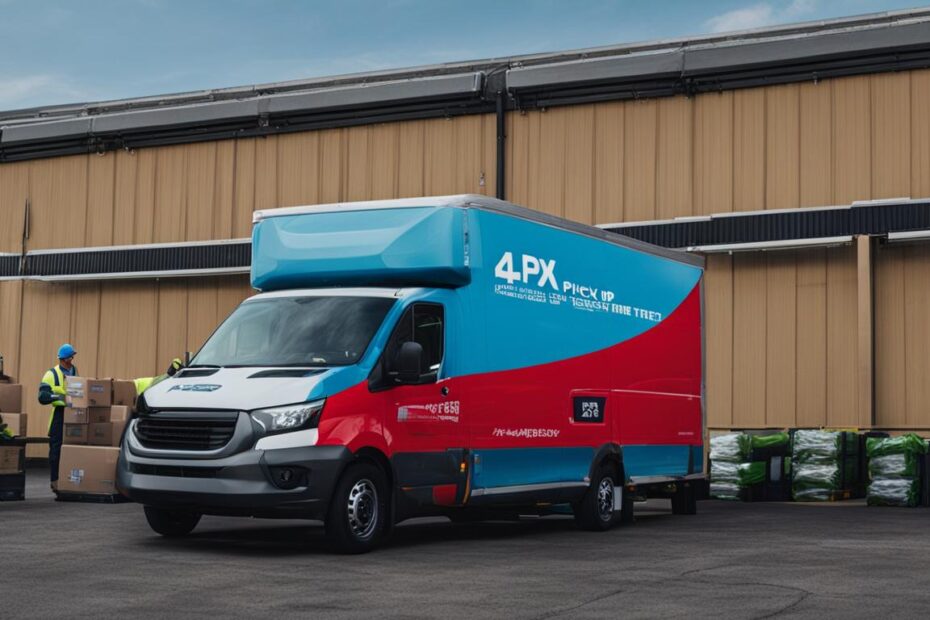
4PX shows up in our routing for two reasons: a specific cost advantage on bulky lightweight goods, and a specific country advantage in parts of the Nordic region. Outside those scenarios, the case for 4PX is harder to make. That’s not a criticism — it’s just how this carrier is shaped. Used in the right scenarios, 4PX consistently outperforms its rate card; used outside them, you’re paying for a positioning you don’t need.
The 4PX service line we route through most is the LianYouTong Priority Registered line. The observations below are based on this line.
Volumetric weight is largely waived. This is the structural mirror image of YunExpress’s pricing model, and it’s the single feature most sellers underrate when comparing carriers. On 4PX’s standard lines, billing is based on actual weight rather than dimensional weight in most cases. A 0.3 kg parcel in a 30×20×15 cm box has a volumetric weight of roughly 1.8 kg under standard divisors — that parcel would be billed at 1.8 kg through YunExpress and at 0.3 kg through 4PX. For catalogs full of soft goods, padded accessories, or anything that ships in protective packaging, this difference compounds quickly. The savings on a bulky-light SKU mix can be the deciding factor between a profitable carrier choice and a marginal one.
Nordic pricing on the LianYouTong line. 4PX’s pricing into Denmark and Sweden tends to beat the alternatives on the LianYouTong Priority Registered line. We don’t see this advantage extend across the rest of the EU — Germany, France, and the Benelux countries don’t show the same gap — but for stores with meaningful Nordic exposure, 4PX is worth dedicated routing. If your DK or SE lanes are currently priced higher than your DE or FR lanes through your existing carrier, that’s a sign 4PX deserves a quote.
No effective claims process. This is the cost of the lower-billing model. If a 4PX parcel is lost in transit, your practical recourse is limited — there’s no overseas investigation team the way YunExpress runs one, and no documented claims pathway with predictable resolution times. We see very few losses on 4PX in absolute terms, but “very few” is partly a reporting artifact: without a real claims pipeline, lost parcels don’t always get formally classified as lost. If a single missing parcel can absorb the margin from twenty deliveries, 4PX is the wrong carrier for that SKU regardless of the rate.
Denmark has no redelivery service. This is one of the most specific blind spots in this entire post, and it catches sellers off guard. Through 4PX into Denmark, if the first delivery attempt fails — wrong address, no one home, refused at door — there is no second attempt. The parcel returns to a depot for pickup or moves into return-to-sender procedures. For low-AOV stores serving Danish customers, this generates avoidable refund requests that don’t show up on competitor lanes.
Smaller size envelope. 4PX’s standard-line size limits are tighter than YunExpress’s. If your catalog includes long items, oversized rectangles, or anything in the irregular-shape category, expect rejections at origin sorting. This is the one dimension where YunExpress and 4PX flip: 4PX wins on the volumetric weight calculation, but YunExpress accepts a wider range of physical sizes.
A direct 4PX account makes sense if:
If your products are physically dense (volumetric weight isn’t your concern), or if your AOV is high enough that claim recovery matters, 4PX’s structural advantages don’t apply to you — and you’ll likely be better served by YunExpress.

Most English-language comparisons describe CNE Express as a regional specialist — usually framed as a Europe-focused alternative to YunExpress. The publicly cited delivery time data partially supports this framing: CNE’s Global Saver standard line to the EU runs 4–10 business days per locateparcels, the tightest standard-line EU window of the three carriers in this post. But the operational picture is more nuanced than “CNE is the EU choice.” Here’s the honest take based on both the public data and our routing experience.
The CNE service line we route through most is the Global Saver line (全球特惠). The observations below are based on this line.
Competitive across the board on the Global Saver line. Publicly cited delivery times for CNE Global Saver fall within or below the ranges of YunExpress and 4PX on the lanes we route through most (see H2#5 charts for full ranges and source citations). Pricing on this line is competitive enough that on certain origin–destination pairs, CNE emerges as the cost-optimal route — particularly when YunExpress’s volumetric weight billing makes that carrier expensive for a specific SKU, or when 4PX’s size limits make that carrier unavailable for a specific parcel. This is the role CNE plays in our routing today: a third option that wins on the math more often than it wins on a specific use case.
A published EU last-mile network that public data partially supports. CNE markets handoffs to GLS, DPD, and Hermes for European delivery. On paper, those partnerships look strong, particularly for Germany, France, and the Benelux — and the publicly cited delivery time data does back up CNE’s EU positioning (4–10 business days for the Global Saver line per locateparcels, the tightest of the three carriers in this comparison). What that data can’t tell you is whether the speed translates into a complete competitive advantage. A faster delivery window matters less if you lose the parcel and have no claims process to recover it, which is the broader picture we cover later in this post. Treat CNE’s published EU edge as a starting point worth evaluating against your own catalog and AOV, not as a reason to consolidate EU volume on CNE alone.
No standout use case in operational terms. This is the honest version of what makes CNE different from the other two carriers in this post. YunExpress has claims handling and large-item compatibility — both with clear seller-side benefits. 4PX has volumetric weight savings and Nordic pricing — also both seller-side benefits with specific situations attached. CNE’s strongest attribute is being competitive on the Global Saver line, including the fastest standard-line EU window we cited above. That’s a real strength, but it’s harder to translate into a “if your situation is X, choose CNE” recommendation — because speed alone, without a claims pipeline or a distinct cost-structure advantage, isn’t a use case. Generalists have their place, but the rationale for choosing CNE specifically is narrower than the case for the other two.
No effective claims process. Same situation as 4PX. If a CNE parcel goes missing, your practical recourse is limited. We see the absolute number of losses as low, but as we noted earlier, low loss numbers without a claims pipeline are partly an artifact of how losses get classified. Apply the same AOV check: if a single missing parcel would absorb the margin from many successful deliveries, CNE is the wrong carrier for that SKU regardless of the rate.
A direct CNE account is harder to justify than a direct YunExpress or 4PX account. The scenarios where it makes sense are narrower:
For most sellers, CNE earns its place in a routing mix through aggregation — by being the right answer on specific shipments rather than for specific seller types. Outside that aggregated routing context, the rationale for going direct is thinner than for the other two carriers in this post.
By now you’ve seen the carrier-by-carrier breakdown. This section goes deeper than the TL;DR: it presents the publicly cited delivery time ranges for each carrier’s standard service lines, shown visually, with both the spread and the sources made explicit.
A reminder on methodology, since this is the data-heavy section: the figures below come from independent third-party tracking aggregators (Ship24, AfterShip, locateparcels, NextSmartShip) and carrier service standards as cited there. These are not our internal numbers. Delivery times are controlled by carriers, and using third-party benchmark data keeps the accountability on the parties who actually set and meet those standards.
The pattern is consistent with the TL;DR table: YunExpress runs the tightest standard-line window (7–12 business days), CNE sits in the middle (7–15 business days), and 4PX standard lines run the widest range (10–25 business days). The wider 4PX range reflects the carrier’s broader service tier structure — its express-tier options (5–15 business days per NextSmartShip) close most of the gap with YunExpress when you pay for them, but the standard-line comparison is what most rate cards quote.
What this chart doesn’t show: when YunExpress’s standard line is at the slow end of its window, it’s usually because of dimensional weight surcharges adding cost (not time), peak season compression in November–December, or customs holds at destination — not because the line itself is unstable. When 4PX standard runs to the upper end of its range, it’s typically the economy variant operating on a slower schedule, not a delivery failure.
EU figures tell a slightly different story: CNE’s standard lines (4–10 business days per locateparcels) actually run faster than YunExpress (7–15 business days) for European destinations, which is consistent with CNE’s published last-mile partnerships with GLS, DPD, and Hermes. 4PX standard lines remain at the wider 10–25 business day range similar to US.
Two country-level nuances the headline range doesn’t capture:
YunExpress EU times stretch on specific destinations. Industry sources (Ship24, OrderTracker) report YunExpress standard line times of 10–20 days specifically for the UK, Germany, Italy, and Spain — markets with heavier customs scrutiny. If your EU volume is concentrated in those countries, plan for the upper end of this range, not the median.
Nordic destinations behave differently from the rest of EU. Public delivery time data typically treats EU as a single region; in practice, Denmark and Sweden specifically show different pricing dynamics through 4PX (covered in H2#3) that don’t show up on a regional bar chart. We don’t have clean public per-country data to chart, but the operational difference is real.
A bar chart of delivery time ranges is useful for setting expectations but dangerous if read too literally. Three caveats worth holding in mind:
1. Ranges are typical, not guaranteed. All figures here are aggregated ranges cited by independent platforms tracking large parcel volumes. Individual parcels fall outside these ranges on either end for reasons outside any carrier’s control — customs delays, address issues, peak season capacity, weather events, recipient availability.
2. The “fastest” carrier on paper isn’t always the right business choice. CNE’s faster standard-line range to the EU matters less if you also need claims handling — which CNE doesn’t run — for high-AOV shipments. YunExpress’s tighter window costs you the volumetric weight premium on bulky-light products. Choosing a carrier on delivery time alone is the dropshipper mistake this entire post is built to help you avoid.
3. Standard line ≠ your full menu. Every carrier offers multiple service tiers. The standard line is what most quoted rates reference, but if you’re optimizing for speed you’ll pay more for express tiers — and if you’re optimizing for cost you’ll absorb longer windows on economy tiers. The bars above are the middle reference point, not the complete picture.
Most carrier comparisons present loss rate as a simple metric: pick the carrier with the lowest number. In practice, the question is more complicated than that — both because loss rates are inconsistently measured across carriers, and because the answer depends heavily on what happens when a parcel is actually lost. The number on a marketing page tells you something; the operational process behind that number tells you more.
Here’s a counterintuitive observation from our routing experience: a carrier with a lower stated loss rate isn’t necessarily losing fewer parcels. They may simply lack a meaningful classification process for the ones that do go missing.
YunExpress, which moves the highest volume of the three carriers in this post, sees what we’d describe as a small but non-trivial volume of lost-parcel cases each month — typically single-digit cases at the volume we route, consistent with a carrier running an active claims pipeline that formally categorizes incidents. 4PX and CNE, in our experience, see “very few” losses — but this figure is partly an artifact of the fact that neither carrier runs a formal claims pipeline that would classify losses systematically. A parcel that vanishes mid-transit on 4PX or CNE often becomes a quiet write-off rather than a documented loss event.
We mention this not to attack the other two carriers — there’s no reason to think their actual loss rates are higher or lower than YunExpress’s in absolute terms — but to caution you against reading “low loss rate” claims as a competitive advantage when they may just reflect the absence of measurement.
This is the operational fact that we believe matters far more than a headline loss percentage.
YunExpress runs an active overseas investigation team. When a parcel is confirmed lost — either through proof-of-loss documentation or extended transit silence (often around a month) — you can file a claim and receive a response within a workable timeframe. The process isn’t fast in the way domestic-carrier claims are fast (we’re talking multi-week resolution rather than days), but it’s a real pathway with predictable steps and documented outcomes. In our experience, claims involving clear loss evidence or extended transit interruptions get processed with reasonable speed.
4PX and CNE Express, in our day-to-day operational experience, do not run meaningful claims pipelines. There is no dedicated overseas investigation team, no documented timeline for resolving loss claims, and no consistent way to recover the value of a lost parcel through the carrier directly. If a parcel goes missing on 4PX or CNE, your practical options are limited: absorb the loss, eat the cost yourself, or refund the customer and write it off as a cost of shipping at a lower rate.
This is part of what you’re trading off when you optimize purely for the lowest carrier rate. The lower base price on the carriers without claims pipelines exists partly because the service infrastructure that handles losses isn’t built into the offering.
Translate this into your own unit economics. Two questions matter:
What is your average order value, and how much margin sits on each parcel? If a single lost parcel would absorb the margin from 20 or 30 successful deliveries — typical for higher-AOV brands, B2B reorder accounts, and tight-margin physical products — claims handling isn’t a nice-to-have. It’s a structural requirement. Pay the YunExpress rate, including its volumetric weight markups, because the alternative is sporadic but meaningful losses with no recovery pathway.
How well can you absorb occasional losses operationally? If your AOV is low, your margins are healthy, and your product is fungible enough that “lost and refunded” doesn’t damage the customer relationship, the carriers without claims pipelines work fine. Ship through them, accept that a small percentage of parcels will quietly vanish, and price the loss into your cost structure rather than your claims workflow.
There is no universal answer here. What we’ve tried to give you is the underlying mechanic so you can decide based on your own business rather than on a marketing claim about loss percentages.
By this point, the three carriers have sorted themselves into clear lanes — and one less-clear one. YunExpress wins on claims and large items. 4PX wins on volumetric weight and Nordic pricing. CNE wins less decisively, by being competitive across the board on the Global Saver line. The decision tree below reflects that asymmetry honestly: YunExpress and 4PX each have specific gateway scenarios; CNE is the carrier that earns routing volume by winning on math, not by winning on a specific seller profile.
This is the logic we use when onboarding new sellers at DailyFulfill. It covers about 80% of routing decisions for the dropshipping seller profile most readers of this post fit.
If a lost parcel would meaningfully hurt your unit economics — high AOV, narrow margins, or B2B customers whose reorder relationship depends on reliable delivery — YunExpress is the right primary carrier. It’s the only one of the three with an active claims process. Pay the volumetric weight premium if you must; it’s almost always cheaper than absorbing unrecovered losses.
If you ship oversized, long, or irregularly shaped items, the choice is similar: YunExpress. 4PX’s standard-line size limits are tighter, and CNE doesn’t show a meaningful size advantage in our routing data either. For furniture, sports equipment, or anything in the irregular-shape category, YunExpress is realistically your only option among the three.
If bulky lightweight goods are most of your catalog — soft goods, padded accessories, anything that ships in protective packaging — 4PX is the right primary carrier. The lack of volumetric weight billing on standard lines compounds quickly across a SKU mix where dimensional weight would otherwise dominate the unit economics.
If Denmark or Sweden are heavily concentrated in your destinations, again 4PX. The LianYouTong Priority Registered line tends to win on pricing for these specific markets, in a way it doesn’t for the rest of the EU.
If none of these filters hit decisively, no single carrier is the right primary choice. This is where mixed routing wins — and where CNE earns its place in our stack. CNE’s Global Saver line is the third option that often wins on the math for specific origin–destination pairs, even when it doesn’t fit a particular seller profile.
Volume threshold. Below roughly 30 parcels a day, direct pricing from any of these carriers is hard to negotiate. The math that drives the decision tree above starts to break — at retail rates, an aggregated platform’s pricing often becomes competitive even before factoring in operational savings.
Restricted categories are a separate question. Items on aviation or customs prohibited lists (lithium batteries above certain thresholds, magnetic products, certain liquids and powders) are restricted across all three carriers, not differentiated between them. Selecting a carrier doesn’t solve that — sourcing, packaging, or routing strategy does.
This tree treats carrier selection as a static decision. In practice, your optimal carrier mix shifts as your volume grows, as your market mix changes, and as each carrier’s performance drifts quarter to quarter. The sellers we see make the fewest shipping mistakes are the ones who revisit this decision every 6 months — not the ones who picked once in year one and never looked back.

By now you might be thinking the obvious thing: “Fine, I’ll just open accounts with all three and route orders myself.” That works for a while — and for some sellers, it works permanently. But the math that breaks it for most sellers isn’t on the rate card. It’s in the things the rate card doesn’t show.
Running three carrier accounts directly means running three of almost everything. Three rate cards, each with their own tiers and surcharges. Three API integrations, each with their own quirks when tracking events don’t sync.
Here’s what the “just do it yourself” framing usually misses: two of the three carriers in this post don’t run a meaningful claims process. If a parcel goes missing on 4PX or CNE, you’re not navigating a claims process — you’re absorbing a quiet loss. YunExpress does have a real claims process, but using it requires knowing to file, gathering the right documentation, and following up across what can be a multi-week resolution timeline.
The operational details compound from there:
None of these are dramatic individually. The cost is cumulative and mostly invisible — until peak season, when you suddenly need to renegotiate capacity with all three at once, reconcile invoices that don’t match your order data, and explain to customers why some parcels are moving fast while others sit in a depot somewhere unclear.
We see sellers underestimate this cost consistently. A seller doing 80 orders a day will calculate “I save $0.40 per parcel by going direct” — which is real — without counting the 5–8 hours a week they spend on carrier coordination, claims follow-up, volumetric weight reconciliation, and country-specific exceptions. At any reasonable hourly value for the seller’s time, those savings disappear.
An aggregated fulfillment platform consolidates all of this. One rate card across carriers. One API for tracking, labels, and exceptions. One point of contact for everything, including claims — for the carrier that has a real claims process, and for the two that don’t.
More importantly, the routing decision happens at the platform level. Rather than running one static rule you wrote in your Shopify app six months ago, the platform evaluates each parcel against current carrier performance, volumetric weight implications, size envelope, and country-specific delivery rules — and picks the carrier that wins for that specific shipment. Static routing rules slowly stop being optimal as carrier performance drifts. Dynamic routing doesn’t.
This is what we built DailyFulfill to do. We route through all three carriers discussed in this post, plus several others, and we adjust the routing logic based on the delivery and loss data we collect across our volume.
Not always. Aggregated routing doesn’t make sense for every seller. If:
— then a direct carrier relationship will likely be cheaper and give you more control. We’ll tell you that on a sales call.
Where we see aggregated routing genuinely win is the middle: sellers doing 30–500 parcels a day across mixed destinations, with catalogs that include some complexity, and operations teams who’d rather focus on product and marketing than on carrier coordination. If that’s you, [let’s run the numbers together](TODO: LINK TO /services/ OR /contact/). We can pull a real routing simulation for your destination mix in about 20 minutes.
Based on our routing data through Q1 2026, YunExpress, 4PX, and CNE all deliver within similar windows for typical US lanes — generally 6–12 days for parcels under 2kg. Speed isn’t the meaningful differentiator between them in 2026. Claims handling, volumetric weight billing, and size envelope matter more for most sellers.
In our experience routing through both, 4PX and CNE do not run meaningful claims processes for lost parcels. There’s no dedicated overseas investigation team and no documented resolution timeline. YunExpress is the only carrier of the three with an active claims process — including overseas investigation and structured timelines for confirmed losses. If lost-parcel recourse matters to your unit economics, this should weigh heavily in your carrier choice.
YunExpress applies volumetric weight billing aggressively across most service lines, charging by dimensional weight rather than actual weight. A 0.3kg parcel in a 30×20×15 cm box has a volumetric weight of 1.8kg — and you’ll be billed for the higher number. For bulky lightweight goods, this can add 20–40% to your effective shipping cost. 4PX’s standard lines largely don’t apply volumetric weight billing in the same way.
4PX has a specific pricing advantage on its LianYouTong Priority Registered line for Denmark and Sweden. Outside those Nordic markets, neither carrier shows a clear EU-wide advantage in our routing data. CNE markets EU last-mile partnerships with GLS, DPD, and Hermes, but our internal Q1 2026 data does not show this consistently translating into an EU-specific edge.
Roughly 30 parcels a day is the floor for direct pricing conversations with any of these carriers. Below that, you’ll likely pay close to retail rates regardless of which carrier you approach. For meaningful direct pricing — meaning rates that beat fulfillment platform pricing — you’ll typically need 50+ parcels a day at consistent volume, often more for the better-tier service lines.
For sellers shipping under 30 parcels a day, or with mixed destinations and product types, a fulfillment platform is usually more economical and operationally simpler. Direct carrier accounts make more sense at higher volumes — typically 500+ parcels a day to one destination with a uniform catalog. Most dropshippers fall in the middle, where aggregated routing wins on both cost and operational complexity.
Learn dropshipping tips, sourcing strategies and fulfillment insights from DailyFulfill
Should you use 4PX for dropshipping? Learn the real delivery times, the difference between Post Link and Special Line, and the biggest problem with 4PX customer service.

Is YunExpress fast enough for dropshipping? See the real 2026 delivery times, understand the DDP Europe Tax advantage, and compare it with 4PX and Yanwen.

Shipping dropshipping orders to the UK or Germany? Read our honest CNE Express review to see real 2026 delivery times, tracking safety, and how it handles European customs.