Home Top Niches
Dropshipping Services
Branding Service Inventory Storage Product Sourcing Fulfillment Solutions White Label Dropshipping Private Label Dropshipping
Fulfillment Services
Amazon Fulfillment Ebay Fulfillment Etsy Fulfillment Shopify Fulfillment TikTok Shop Fulfillment WooCommerce Fulfillment
Launch Your Brand
Branding Support Store Design Shopify App Design Label Design Financial Services Custom Solutions
About Us
About Us Blog FAQs Our Team Free Quote Integrations Testimonials
China Fulfillment for Growing Ecommerce Stores

Reliable Fulfillment for Stores That Have Outgrown Basic Dropshipping

Keep your existing suppliers or source through DailyFulfill. Our team receives inventory, manages SKUs, processes orders, verifies products, packs parcels, selects shipping routes, returns tracking, and coordinates delivery exceptions.

Best for stores with active orders, identified products, or a specific fulfillment workload to evaluate.

Trusted by dropshippers worldwide

20,000+
Orders Per Day
Processing capacity
6,000+
Active Stores
Across 50 countries
4.9★
Trustpilot Rating
456 verified reviews
9yr
In Business
Since 2017
When Fulfillment Becomes the Bottleneck

Built for sellers with products and orders—not just a product idea

The right time to use a fulfillment partner is when order execution, inventory, shipping, or after-sales can no longer be managed reliably through a public marketplace or a basic agent.

01

Outgrow AliExpress or a Basic Agent

Replace slow processing, inconsistent packaging, limited visibility, and fragmented after-sales with an agreed fulfillment workflow.
02

Keep Your Existing Suppliers

Your approved suppliers can send products to the agreed DailyFulfill warehouse while our team handles receiving and order execution.

03

Switch Fulfillment Partners

Plan a controlled transfer of SKUs, inventory, packaging, store connections, test orders, and open delivery issues.

04

Scale Stocked SKUs

Pre-stock repeat sellers, manage more variants, support multi-item orders, and prepare for higher daily or seasonal volume.

Important fit: Fulfillment starts when you have identified products, suppliers, inventory, or real orders. If you still need to find and validate a supplier, start with our Product Sourcing service.

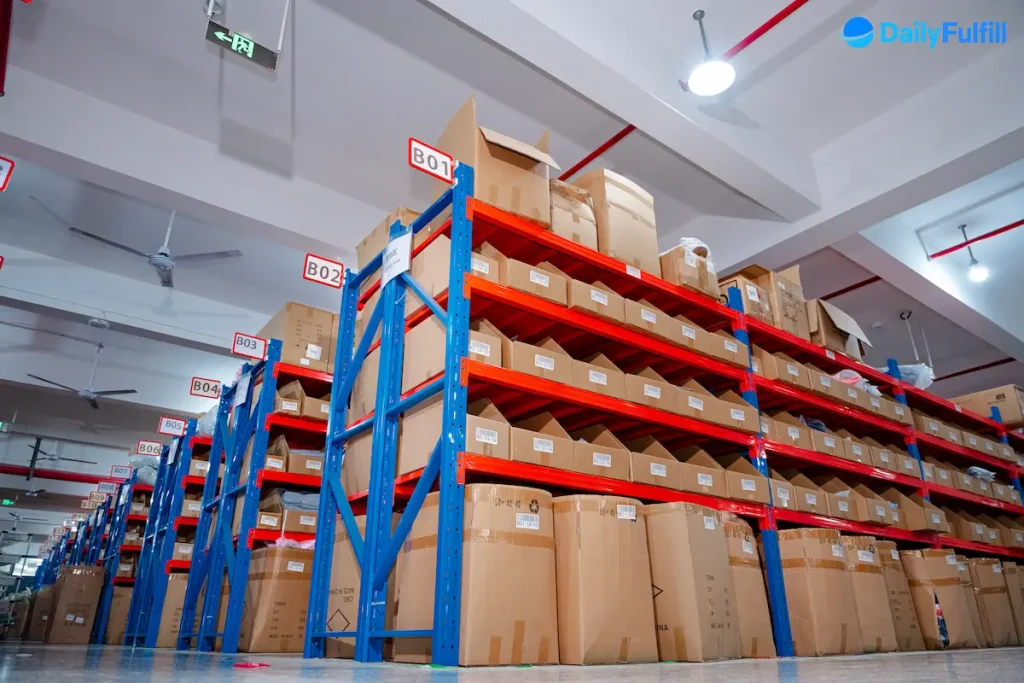
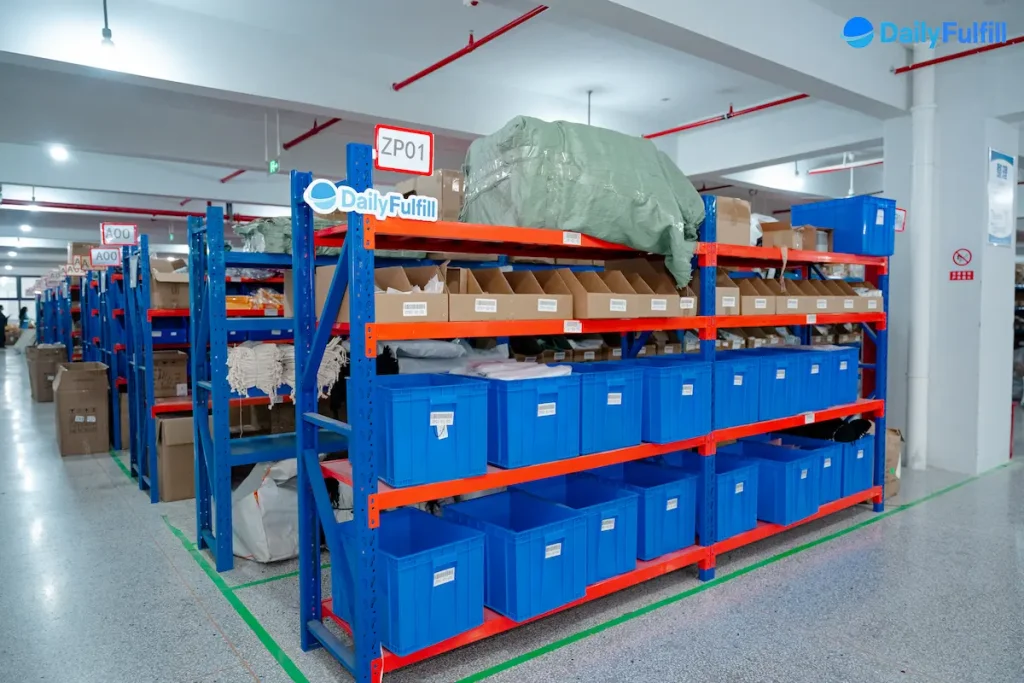
Local Fulfillment Teams in Yiwu and Guangzhou

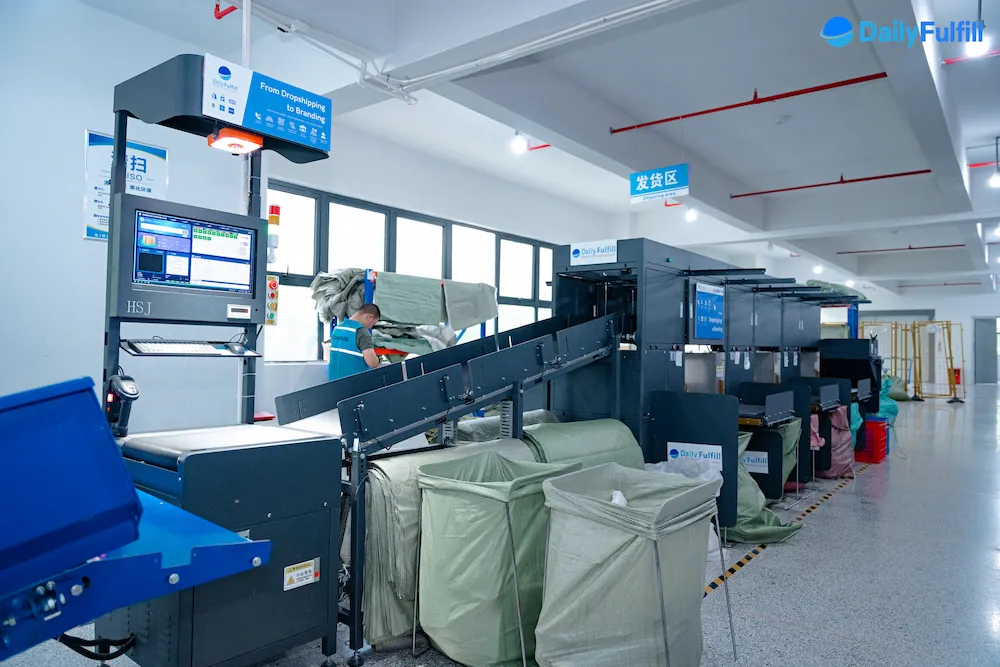
Our Yiwu and Guangzhou fulfillment teams coordinate inbound shipments, SKU and variant checks, inventory setup, picking, order verification, packaging, carrier handoff, tracking, and fulfillment exceptions with your suppliers and store team.

Two Fulfillment Models

Separate inventory preparation from carrier transit time

A carrier estimate does not include every step before the parcel is handed over. The correct model depends on how stable the SKU is and whether inventory is already available.

Stocked Fulfillment

For repeat sellers and products with predictable demand.

  • Your supplier or DailyFulfill sends approved inventory to the warehouse
  • Products are received, counted, identified, and stored by SKU
  • Orders can move directly into pick, verify, pack, and dispatch
  • Faster processing is possible when inventory and packaging are ready
  • Replenishment should be planned before the SKU reaches zero stock

On-Demand Preparation

For product tests, new SKUs, and less predictable demand.

  • The supplier or sourcing team prepares products after orders or batches are confirmed
  • Supplier response, domestic delivery, receiving, and checks add preparation time
  • Inventory risk may be lower, but order processing is less immediate
  • Frequently ordered SKUs can later be moved into a stocked model
  • The customer-facing delivery promise must include preparation and carrier transit
Processing Readiness

Fast dispatch depends on what is ready before the cutoff.

Stocked inventory makes faster processing possible, but inventory alone is not enough. SKU mapping, packaging, order information, route eligibility, and the agreed cutoff all affect when a parcel can be handed to the carrier.

Ready for Faster Processing

The order is operationally ready.

These conditions allow an order to move into the agreed warehouse workflow without waiting for an unresolved dependency.

  • The product is physically available in the agreed warehouse
  • SKU, variant, and bundle mapping has been confirmed
  • Required packaging, inserts, and labels are available
  • Order and address information is complete
  • The product is eligible for the confirmed shipping route
  • The order enters before the agreed processing cutoff
What Can Delay Dispatch

A required dependency is still unresolved.

These conditions may add preparation or investigation time before the parcel can be transferred to the carrier.

  • On-demand purchasing, supplier stockouts, or domestic delivery
  • Inbound quantity, SKU, or inventory discrepancies
  • Late order transfer or exceptional peak-season volume
  • Missing custom packaging, inserts, or order materials
  • Incomplete addresses, unusual address formats, or expired labels
  • Product restrictions or unavailable shipping routes
The Time Boundary

Where shipping time actually begins

The customer-facing delivery promise should include all stages, not only the carrier’s estimated transit time.

01

Product Preparation

On-demand purchasing, supplier response, domestic delivery, inbound receiving, and required product checks happen here.

02

Warehouse Processing

Pick, verify, pack, weigh, label, and prepare the parcel according to the agreed order workflow.

Shipping Time Starts Here
03

Carrier Transit

The confirmed route begins after the parcel reaches the defined carrier-handover or dispatch event.

Total customer delivery time should account for product preparation, warehouse processing, carrier transit, and applicable exceptions—not only the carrier estimate.

End-to-End Order Workflow

What happens after you hand fulfillment to DailyFulfill

A reliable operation makes every handoff visible—from inventory planning and receiving to order checks, packing, tracking, and exception handling.

Plan

Confirm the operating model

Review SKUs, volume, countries, platforms, inventory, packaging, processing expectations, and exception rules.

Receive

Bring products into the warehouse

Sign for the inbound shipment, confirm the carton count and shipment information, then unpack the products according to the agreed receiving instructions.

Identify

Count and map inventory

Check SKU, variant, quantity, visible product consistency, labels, packaging, and product condition. Photograph discrepancies before shelving, returning, or reordering the goods according to the agreed instruction.

Sync

Receive customer orders

Orders enter through the agreed store connection, system workflow, or approved order-import method.

Verify

Pick and check the order

Select the correct SKU, size, color, quantity, bundle items, and agreed order-level checks before packing.

Pack

Use the correct packaging

Apply neutral or branded packaging, inserts, labels, protection, and bundle instructions assigned to the order.

Ship

Select the route and return tracking

Choose the confirmed route by destination, product, weight, cost, and time, then return tracking through the agreed workflow.

Resolve

Handle exceptions and replenishment

Coordinate delayed, lost, returned, damaged, or incorrect orders and trigger inventory replenishment when required.

Keep Your Supplier or Switch Your Agent

Do not replace more of your supply chain than necessary

You may already have good factories. Changing your fulfillment agent and changing your product supplier are two separate decisions. Keep the supply relationships that work, and replace only the operational layer that needs to change. Product sourcing can be added separately when needed.

01
Keep the Supply Base

Keep existing suppliers

Use DailyFulfill as the warehouse and order-execution layer while approved factories continue supplying the product.

Keep approved factories

Continue with suppliers that already meet your product and supply requirements.

Send complete inbound details

Share product, SKU, quantity, packaging, carton, and shipment information before dispatch.

Agree warehouse instructions

Confirm labeling, receiving, discrepancy, and inspection rules before inbound.

Separate supply from execution

DailyFulfill manages inventory, orders, packing, shipping, and fulfillment exceptions.

02
Change the Operating Layer

Switch from another agent

Move only as quickly as inventory, store connections, and responsibility boundaries allow.

Choose the transition method

Use a full move, phased transfer, or limited test based on existing inventory.

Reconcile transferred stock

Check quantities, SKU labels, cartons, packaging materials, and product condition.

Test the operating workflow

Verify store connection, order sync, packing, labels, tracking return, and selected routes.

Increase volume after stability

Move more orders only after inventory, processing, shipping, and responsibilities work as agreed.

Migration Boundary

Define where the old workflow ends and the new one begins.

Agree on the order, inventory, and after-sales boundary before moving volume.

01 Order Boundary

Choose a cutoff date or order number. Earlier orders stay with the previous agent; later orders enter the new workflow.

02 Inventory Handoff

Reconcile transferred quantities, SKU labels, packaging materials, and product condition before use.

03 Open Issues

Assign responsibility for old shipments, returns, claims, and unresolved after-sales before the transition.

Standard Order Check

Order-level checks verify the parcel being prepared

During picking and packing, the standard check focuses on whether the agreed product, quantity, packaging, and dispatch details are correct for that specific customer order.

  • Correct SKU, variant, size, color, and quantity
  • Correct bundle components or multi-item contents
  • Visible product damage or obvious packaging issues
  • Correct card, sticker, pouch, box, or other agreed insert
  • Correct shipping label and agreed dispatch method
Not automatically included on every unit Functional testing, measurements, disassembly, hidden-defect inspection, and full-batch inspection require a separately agreed scope.
Fulfillment Quality Control

Define what is checked per order—and what requires a separate inspection scope

The inspection method should match the product risk and the purpose of the check. Batch sampling, full inspection, functional testing, measurements, photo or video evidence, and product-specific tolerances should be confirmed before the work begins.

Consider an expanded inspection scope when:

A client requests a defined inspection standard
The previous batch produced after-sales issues
Goods are arriving from a factory for the first time
The product is new, functional, or higher risk
Where the boundary sits: supplier evaluation and sample approval belong in the Product Sourcing workflow. Batch sampling or full inspection can be arranged separately, with the method, sample size, evidence, and exception handling confirmed upfront.
Shipping Route Decisions

Choose the route for the order—not one carrier for every product and country

The best route depends on the destination, product, parcel, delivery target, tracking requirements, and exception rules. These conditions should be confirmed before the store makes a customer-facing promise.

Destination country Available routes, local delivery partners, remote-area limits, and historical stability vary by market.
Product attributes General goods, batteries, liquids, health-related products, and other restricted categories require different reviews.
Weight and dimensions Actual and volumetric weight can change which route provides the appropriate cost and delivery balance. Shoeboxes, plush toys, pillows, and gift boxes with large empty spaces are common examples of parcels that may become more expensive because of volumetric weight.
Cost and target delivery time The recommended route should reflect the store’s customer promise and acceptable shipping budget.
Tracking and final-mile coverage Confirm when tracking begins, how it is returned, and which delivery events are available.
Exception and claim rules Clarify delay, return, loss, address-error, customs, evidence, and compensation conditions before problems occur.
Stage 1

Product preparation

Stocked inventory can move directly to order processing. On-demand products require supplier or sourcing preparation first.

Stage 2

Warehouse processing

Pick, verify, pack, weigh, label, and hand the parcel to the carrier according to the agreed cutoff and service plan.

Stage 3

Carrier transit

The route estimate starts at the defined carrier-handover event and varies by country, product, season, and exceptions.

Fulfillment Proposal

A useful quote explains the workflow and cost components

Even when fixed public prices are not possible, you should be able to see which parts of the operation affect your fulfillment cost and which assumptions the proposal uses.

Component What should be confirmed
Inbound receiving Supplier shipment information, quantity counting, SKU mapping, discrepancy handling, and product condition checks.
Inventory storage Standard storage for active fulfillment clients. Oversized, inactive, transfer-out, disposal, packaging-material, or other exceptional arrangements are confirmed before inbound.
Pick and pack Single-SKU, multi-item, bundle, variant, insert, repacking, and special handling requirements.
Quality control Standard order-level checks, batch sampling, product-specific tests, full inspection, and photo or video requests.
Packaging Neutral materials, branded materials, protection, size, weight, replenishment, and packaging-production costs.
International shipping Destination, product attributes, chargeable weight, route, tracking, estimated transit, and exception conditions.
Returns and after-sales Return destination, inspection, restocking, damage classification, claim evidence, responsibility, and additional charges.
Store Integrations

Connect Your Store and Keep Fulfillment Moving

DailyFulfill supports fulfillment workflows for major ecommerce platforms. We confirm how orders enter the system, how SKUs are mapped, and how fulfillment status and tracking are returned to your store.
Order Sync Bring customer orders into the agreed fulfillment workflow.
SKU Mapping Match products, variants, bundles, and warehouse inventory.
Status Updates Keep order progress aligned with the agreed store workflow.
Tracking Return Send available shipment tracking back through the workflow.
Shopify fulfillment services by DailyFulfill
Shopify

Shopify Fulfillment

Connect Shopify orders with your DailyFulfill workflow, map SKUs and variants, process customer orders, and return shipment tracking.

Explore Shopify Fulfillment
TikTok Shop fulfillment services by DailyFulfill
TikTok Shop

TikTok Shop Fulfillment

Coordinate TikTok Shop orders, inventory, fulfillment status, shipping routes, and tracking through an agreed operational workflow.

Explore TikTok Shop Fulfillment

WooCommerce fulfillment services by DailyFulfill
WooCommerce

WooCommerce Fulfillment

Connect your WooCommerce operation with inventory, SKU handling, order processing, packing, shipping, and tracking workflows.

Explore WooCommerce Fulfillment
Amazon fulfillment support by DailyFulfill
Amazon

Amazon Fulfillment Support

Coordinate approved Amazon order workflows with SKU handling, inventory preparation, parcel processing, shipping, and tracking.

Explore Amazon Fulfillment
eBay fulfillment services by DailyFulfill
eBay

eBay Fulfillment

Manage eBay orders with an agreed workflow for SKUs, inventory, packing, international shipping, shipment status, and tracking.

Explore eBay Fulfillment
Etsy fulfillment services by DailyFulfill
Etsy

Etsy Fulfillment

Support Etsy orders with SKU-level handling, neutral or branded packaging, parcel processing, international shipping, and tracking.

Explore Etsy Fulfillment
Integration method depends on your operation. Before launch, we confirm your platforms, SKUs, order flow, inventory model, status updates, tracking workflow, and any platform-specific requirements.

Already have products and suppliers? Start with Fulfillment. Still need a supplier? Start with Product Sourcing.

DailyFulfill can support sourcing and fulfillment together, but you can use either service independently. This keeps the proposal focused on the problem you actually need to solve.

I have suppliers or inventory

Review receiving, SKU setup, store connections, packaging, processing, routes, and migration requirements.

I need to find or replace a supplier

Compare product specifications, supplier options, cost, MOQ, samples, production time, and batch inspection first.

What our clients say

Real Stores. Real Results.

Over 6,000 dropshipping stores trust DailyFulfill to handle their orders every day. Here is what some of them say.

6,000+
active stores
20,000+
orders / day
50+
countries
★★★★★

"We started with fewer than 10 orders a day. After switching our sourcing and fulfillment to DailyFulfill, we now ship over 1,000 orders daily — with full custom branding on every package."

US
US-based brand owner
Shopify · 1,000+ orders/day
✓ Verified client result
★★★★★

"The quality inspection process gives me total peace of mind. I get photo reports before every shipment goes out — so I always know exactly what my customers will receive. No more surprise complaints."

EU
European store owner
WooCommerce · Private label products
✓ Verified review

Build a fulfillment plan around
your real operation.

Share your SKUs, average and peak daily order volume, inventory model, packaging, destinations, store platforms, and current fulfillment bottlenecks. We’ll confirm the workflow, service scope, cost components, and recommended test before launch.

Request a Fulfillment Review → Talk to an Operations Specialist
Clear scope before launch · Stocked and on-demand workflows available
Fulfillment FAQs

Clear answers before inventory or order volume moves

The exact workflow depends on your products, inventory model, packaging, destinations, store platform, and shipping routes. Processing targets, inspection scope, costs, exceptions, and after-sales responsibilities are confirmed in your fulfillment plan before launch.

01

Setup and migration

Can I keep my existing suppliers?

Yes. Changing your fulfillment agent does not automatically require changing your product suppliers. Approved suppliers can continue producing the products while DailyFulfill handles receiving, inventory, and customer-order execution.

Before the first inbound shipment, confirm the supplier and product information, SKU mapping, expected quantities, carton markings, packaging materials, receiving instructions, inspection scope, and how inbound discrepancies will be handled.

Can I test DailyFulfill before moving all orders?

Yes. A staged test is usually safer than moving everything at once. Depending on your existing inventory, the test can cover selected SKUs, one store, specific destinations, or a limited number of daily orders.

The test should verify inventory receiving, store synchronization, picking, packaging, label creation, tracking return, and the agreed shipping route. Order volume can increase after the workflow and responsibility boundaries are stable.

How do I switch from my current fulfillment agent?

Start by reviewing your products, SKUs, daily order volume, destination countries, platforms, current inventory, packaging, shipping routes, open orders, and unresolved after-sales issues.

Before moving volume, agree on a clear cutoff date or order number and define who remains responsible for earlier orders, transferred inventory, and unresolved cases. Existing stock can be consumed, transferred in batches, or moved in full, depending on the inventory condition and operational risk.

What problems should be checked during an inventory transfer?

Common transfer issues include quantity differences, inconsistent SKU labels, unclear carton markings, missing packaging materials, and differences in product condition. Transferred items should be counted, matched to an agreed item list, photographed when necessary, and reconciled before larger order volume is moved.

02

Processing, QC and shipping

What is the difference between stocked and on-demand fulfillment?

Stocked fulfillment means the approved, order-ready products are already available in the warehouse and can move directly into customer-order processing.

On-demand fulfillment requires purchasing, supplier preparation, production, or inbound receiving before warehouse processing begins. That preparation time is separate from carrier transit, so the total customer delivery time is longer and more variable.

How quickly are stocked orders processed?

Pre-stocked, order-ready inventory confirmed before the agreed cutoff can usually be processed within the same business day. This is a processing target rather than a blanket guarantee for every order.

Stockouts, late inventory transfers, inventory mismatches, invalid or expired labels, address exceptions, restricted shipping routes, unusual order volume, holidays, and peak periods can delay dispatch. The applicable cutoff and processing target should be written into your fulfillment plan.

When does shipping time start, and how long does transit take?

Carrier transit begins after the parcel has completed warehouse processing and has been dispatched or handed over to the shipping carrier. Product purchasing, production, inbound receiving, QC, and repacking happen before dispatch and are not counted as carrier transit.

The current standard estimate after dispatch is approximately 3–8 days to the EU and 6–12 days to the US. These are route-based estimates, not guaranteed delivery dates. Destination, product attributes, customs, address quality, carrier performance, and peak-season conditions can affect the actual result.

What quality checks are included during fulfillment?

The standard order-level check focuses on whether the correct SKU, variant, size, color, quantity, bundle contents, packaging, inserts, shipping label, and dispatch method are being prepared for that customer order. Visible product or packaging damage can also be identified during this process.

Batch sampling, full inspection, functional testing, measurements, disassembly, photo or video evidence, and product-specific tolerances are not automatically performed on every unit. These requirements should be scoped separately before the work begins.

How are orders and tracking numbers synchronized?

The workflow depends on the store platform and integration method. During onboarding, confirm which order fields, SKU and variant information, inventory data, fulfillment statuses, and tracking events synchronize automatically and which steps require manual support.

A test order should confirm the complete workflow before larger volume is connected. A tracking number being created does not always mean that the carrier has already physically received the parcel, so label creation and carrier handoff should be treated as separate events.

Why can tracking remain unchanged after dispatch?

Tracking visibility depends on the shipping route and carrier. Some cross-border routes show an initial scan quickly, while others may not display a public update until customs, line-haul transfer, or the destination-country carrier receives the parcel.

When tracking does not update, the first steps are to check the carrier backend, confirm customs or transfer status, and open an inquiry when the route conditions allow it. The route policy should define the investigation period and available next steps.

What happens when a parcel is delayed or lost?

The applicable shipping-route policy should define when a parcel is officially considered delayed or lost, what evidence is required, which situations are excluded, the investigation period, and whether the available remedy is reshipment, reimbursement, credit, or another solution.

Compensation is determined by the evidence, the cause of the problem, the carrier policy, and the agreed service scope. There is no blanket automatic “100% compensation” promise for every delayed or lost parcel.

03

Inventory, returns and commercial scope

Is warehouse storage free?

Standard storage is free for active clients within the agreed operating scope. Exceptional or oversized inventory, long-term inactive stock, transfer-out arrangements, disposal, relabeling, or other special handling should be confirmed before the inventory arrives.

How are returns handled?

Return handling depends on the destination, available return address, product condition, and the cost of returning the item. When a returned product reaches the agreed facility, it should be matched to the order and inspected.

A resellable item may be returned to inventory. Damaged, incomplete, used, or otherwise unsuitable inventory is handled according to the client’s agreed instructions, such as reporting, holding, returning, or disposal.

What happens if an order has a fulfillment or product problem?

The order record, SKU information, package label, tracking data, photos, videos, and returned item may be reviewed to determine whether the issue originated with the supplier, warehouse process, carrier, product itself, or delivery information.

Reshipment, refund, credit, or another solution is determined by the available evidence, the cause, the affected cost, and the agreed after-sales policy. The remedy is not automatic or identical for every case.

Does every fulfillment project have the same MOQ?

No. For products you already own or keep in stock, fulfillment is normally scoped around SKU count, daily order volume, receiving requirements, packaging, and shipping routes rather than one universal product MOQ.

If DailyFulfill is also purchasing or customizing products, the supplier or production MOQ is quoted separately. Stock standard items may start from 1 piece, common custom-logo projects are typically around 200–500 pieces, and molds or special production processes may require 1,000 pieces or more. The applicable MOQ is confirmed for the specific product and process.

What does a fulfillment quote include?

A fulfillment proposal should separate receiving, inventory handling, standard storage, pick and pack, packaging materials, inspection, shipping routes, returns, and optional services. It should also state the assumptions used for SKU count, order volume, parcel weight and dimensions, destination countries, packaging, and service level.

Exceptional storage, custom packaging, expanded inspection, relabeling, inventory transfer, disposal, return processing, and other non-standard requirements should be identified separately so the commercial scope is clear before launch.