CJ says 7–15 days.
Sellers say 10–25 days.
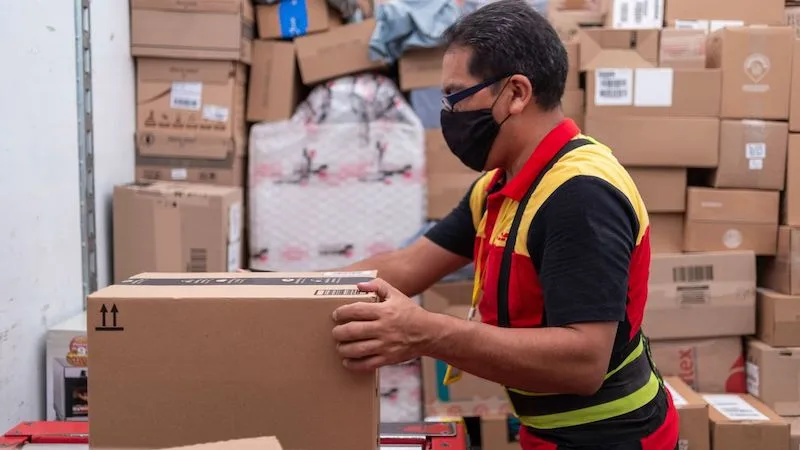
We’ve fulfilled thousands of CJ-connected orders from our warehouse. Here’s what we actually see — and what you need to know before you promise your customers anything.
We are DailyFulfill, a fulfillment agent. We don’t work for CJ. We work alongside them — our clients use CJ for sourcing, and we handle the physical shipping and inspection side. That gives us a front-row view of what CJ’s shipping looks like in the real world, not on a marketing page.
CJ's Warehouse Network — Where Your Product Actually Ships From
CJ operates warehouses in over 30 countries. That sounds impressive. But for shipping speed, only a few of those warehouses matter — the ones closest to your customers.
Here are the key locations as of early 2026:
| Warehouse Location | Primary Market Served | What Ships From Here |
|---|
| US — California | West Coast US | Pre-stocked inventory, USPS last-mile |
| US — New Jersey | East Coast US | Pre-stocked inventory, USPS last-mile |
| Germany | European Union | Pre-stocked EU inventory, avoids customs |
| Thailand | Southeast Asia | Lazada/Shopee sellers |
| Indonesia | Southeast Asia | Local SEA fulfillment |
| China — Yiwu & Shenzhen | Global (default) | The vast majority of CJ’s 400,000+ catalog |
Warehouse data from CJ’s official website and blog, Q1 2026.
The critical detail CJ’s marketing buries: Most products are NOT in local warehouses. CJ’s catalog has 400,000+ items. Only a fraction of those are pre-stocked in the US or European warehouses. Unless you actively filter for “US Warehouse” or “DE Warehouse” when sourcing, your product is almost certainly shipping from China.
This single detail is the difference between a happy customer and a PayPal dispute.
Shipping Method Breakdown — CJ's Real Transit Times
CJ operates warehouses in over 30 countries. That sounds impressive. But for shipping speed, only a few of those warehouses matter — the ones closest to your customers.
Here are the key locations as of early 2026:
| Warehouse Location | Primary Market Served | What Ships From Here |
|---|
| US — California | West Coast US | Pre-stocked inventory, USPS last-mile |
| US — New Jersey | East Coast US | Pre-stocked inventory, USPS last-mile |
| Germany | European Union | Pre-stocked EU inventory, avoids customs |
| Thailand | Southeast Asia | Lazada/Shopee sellers |
| Indonesia | Southeast Asia | Local SEA fulfillment |
| China — Yiwu & Shenzhen | Global (default) | The vast majority of CJ’s 400,000+ catalog |
Warehouse data from CJ’s official website and blog, Q1 2026.
The critical detail CJ’s marketing buries: Most products are NOT in local warehouses. CJ’s catalog has 400,000+ items. Only a fraction of those are pre-stocked in the US or European warehouses. Unless you actively filter for “US Warehouse” or “DE Warehouse” when sourcing, your product is almost certainly shipping from China.
This single detail is the difference between a happy customer and a PayPal dispute.
Shipping Method Breakdown — CJ’s Real Transit Times
CJ offers multiple shipping methods. Each one has a different speed, price, and tracking quality. Here’s the honest breakdown:
From CJ’s US Warehouse (Best Case)
| Method | Delivery Time | Tracking Quality | Cost |
|---|
| USPS (from US warehouse) | 2–5 business days | Excellent — full USPS tracking | Higher (warehousing fees built into product price) |
| DHL/UPS (from US warehouse) | 2–4 business days | Excellent | Premium — adds $5–$15 per order |
This is CJ’s headline number. And when it works, it’s genuinely fast — close to Amazon speed. CJ’s own blog promotes “3-day delivery” from US warehouses, and multiple sources confirm 2–5 day delivery is realistic for US warehouse orders.
The catch: The product has to be in the US warehouse. If it’s not, these times don’t apply.
From China (The Reality for Most Orders)
| Method | CJ’s Published Estimate | What Sellers Report | Tracking Quality |
|---|
| CJ Packet | 7–15 days | 8–17 days typical | Partial — tracking often blank for first 5–8 days |
| CJ Packet (sub-lines) | 7–12 days | 10–15 days typical | Varies by sub-line |
| ePacket | 10–20 days | 12–25 days typical | Partial — slow updates |
| CJ Air Freight | 5–8 days | 6–10 days typical | Good — faster updates |
| YunExpress | 7–15 days | 8–15 days typical | Decent — better than ePacket |
| USPS (from China) | 10–20 days | 12–22 days typical | Good once in US, blank before |
CJ’s published estimates from their official shipping page and blog. “What sellers report” reflects feedback from Shopify App Store reviews, Trustpilot, and seller community discussions. Individual results vary by product weight, destination, and season.
The gap between “published” and “reported” is typically 2–5 days. CJ’s estimates assume everything goes right: fast processing, no customs delays, no carrier backlogs. Real-world conditions add a buffer.
CJ Packet is CJ’s proprietary shipping line and generally the best balance of speed and cost for China-to-US shipping. It uses contracted airline routes and dedicated trucking, which makes it faster than ePacket. For most sellers shipping to the US from China, CJ Packet is the recommended choice.
ePacket is fading. Multiple price increases over the past few years have made ePacket less competitive. CJ’s own blog has acknowledged that ePacket pricing is “no longer competitive” and delivery times have become inconsistent. If you’re still defaulting to ePacket, it’s time to switch to CJ Packet or YunExpress.
US Warehouse vs China: The Speed Gap in Real Numbers
Let’s make this concrete. Same product. Same customer in Texas. Two different shipping origins:
| Factor | CJ US Warehouse | CJ China (via CJ Packet) |
|---|
| Processing time | Same day (if in stock) | 1–3 days (stocked) / 3–6 days (not stocked) |
| Transit time | 2–5 days | 7–15 days |
| Total delivery time | 2–5 days | 8–21 days |
| Customer tracking experience | Full USPS tracking from day 1 | Blank for 5–8 days, then updates |
| Return process | Ship to US address | $15–$30 return shipping to China |
| Product cost | Higher (warehousing fees included) | Lower |
The speed gap is 3–16 days. That’s not a minor difference. In ecommerce, every day of waiting increases the probability of a “where is my order?” email, a negative review, or a chargeback.
How to Filter for US Warehouse Products on CJ
This is the single most impactful thing you can do to improve your CJ shipping speed:
- Log into your CJ dashboard.
- Go to the product catalog.
- Click the “US Warehouse” filter at the top of the page (or “DE Warehouse” for Europe).
- Browse only products that show a US warehouse tag.
Products in the US warehouse have the stock badge visible on the product listing page. If you don’t see it, the product ships from China.
Important limitation: The US warehouse selection is much smaller than CJ’s full China-based catalog. You may not find trending or niche products in the US warehouse. For popular categories like phone accessories, kitchen gadgets, and pet supplies, you’ll usually find options. For very niche or brand-new trending items, they’re almost always China-only.
Can You Stock Products in CJ’s US Warehouse Yourself?
Yes. CJ allows you to ship your own inventory to their US warehouse for fulfillment. But this changes the business model:
- Minimum order: Typically 50–200 units per product.
- Upfront cost: You pay for the inventory before a single customer order.
- Warehousing fees: CJ charges storage fees after a 90-day free storage period.
- Risk: If the product doesn’t sell, you’re stuck with unsold inventory in a warehouse.
This makes sense for proven best-sellers where you have reliable sales data. It doesn’t make sense for new products you’re still testing. For testing, ship from China and accept the slower speed. For scaling, move winners to the US warehouse.
Shipping to Europe — A Different Game
Most CJ shipping guides focus on the US. But many of you reading this sell to European customers. The European shipping picture is different — and in some ways, more complicated.
CJ’s Germany warehouse serves the EU. Products stocked there can reach most EU countries in 3–7 business days, with no customs delays because the goods are already inside the EU.
But the same limitation applies: the German warehouse has a much smaller selection than CJ’s China catalog. Most products still ship from China to Europe, which means:
- Transit time: 15–25 days via CJ Packet or ePacket to most EU countries.
- Customs and VAT: Since July 2021, the EU eliminated the €22 VAT exemption for imports. This means your customer may be charged import VAT (typically 19–25% depending on the country) on delivery. Many customers are surprised by this charge — they refuse the package, and you lose the sale plus the shipping cost.
- DDP vs DDU shipping: DDP (Delivered Duty Paid) means customs duties are prepaid and your customer pays nothing extra on delivery. DDU (Delivered Duty Unpaid) means your customer gets a surprise tax bill at their door. CJ offers some DDP shipping options, but they cost more. Check with your CJ agent which routes support DDP before selling to Europe.
The under-promise strategy matters even more for Europe. If CJ quotes you 15–20 days to Germany, tell your customer 20–25 days. Customs clearance in some EU countries (Italy, Spain) can add 3–7 days of unpredictable delay.
For sellers whose primary market is Europe: if you’re doing consistent volume to the EU, it’s worth exploring a fulfillment partner with a European warehouse that handles VAT pre-clearance. The customer experience difference between “surprise customs charge” and “delivered, no extra fees” is enormous.
Peak Season Reality Check — When CJ's Times Get Worse
CJ’s shipping estimates are averages across normal months. During peak periods, those averages stretch significantly.
Q4 (October – December): Add 3–5 days to everything.
This is peak ecommerce season globally. Black Friday, Cyber Monday, Singles’ Day (November 11), Christmas shopping — every warehouse, airline, and postal service is running at capacity. CJ’s own blog has acknowledged that processing times increase during peak season due to order overload.
Concrete impact:
- CJ Packet to US: normally 8–17 days → during Q4, expect 12–22 days.
- US warehouse orders: normally 2–5 days → during Q4, expect 3–7 days (USPS slows down too).
Chinese New Year (January/February): Add 1–2 weeks for China shipments.
Most Chinese factories and CJ’s China warehouses shut down for 7–15 days during CNY. Orders placed during this period are not processed until staff return. CJ usually announces the shutdown schedule in advance, but many new sellers don’t notice until their orders are already stuck.
How to prepare:
- For Q4, stock your proven best-sellers in CJ’s US warehouse by September. Don’t wait until November.
- For CNY, either pre-stock inventory or pause advertising on China-shipped products during the shutdown period.
- Adjust your store’s shipping promise during peak seasons. A temporary banner saying “Holiday shipping may take 5–7 extra days” is far better than 50 angry customer emails.
The Tracking Problem — Why Your Customer Panics on Day 3
Your customer buys a product. They get a tracking number. They check it immediately (because everyone does). And they see:
“No information available” or “Label created, awaiting carrier pickup.”
For the next 5–8 days, nothing changes. The customer checks again. And again. Still nothing. By day 5, they email you: “Where is my order? Did you even ship it?”
This is the tracking dead zone — and it happens on almost every China-to-US CJ shipment.
Here’s why: CJ generates a tracking number when the order is processed in China. But that tracking number often doesn’t become active in the destination country’s postal system (like USPS) until the package physically arrives in the US and clears customs. That in-between period — the flight from China to the US, customs clearance, and handoff to USPS — is invisible to the customer.
The real-world impact:
- Customers who see “no tracking info” for 5+ days are significantly more likely to file a support ticket, request a refund, or open a PayPal/credit card dispute.
- These disputes take your time to resolve and — in the case of chargebacks — cost you $20+ in fees even if you eventually win.
How to manage this:
- Set expectations in your shipping confirmation email. Tell customers: “Your tracking number may take 5–7 business days to show updates. This is normal for international shipments.”
- Use a multi-carrier tracking page. Services like 17Track or AfterShip can aggregate tracking data from Chinese and international carriers, showing more granular updates than USPS alone.
- Consider branded tracking. Instead of sending customers a raw USPS or CJ tracking link, use a branded tracking page with your store’s logo and a message like “Your order from [Store Name] is on its way!” This looks professional, reduces anxiety, and gives you a chance to promote other products while the customer waits. This is one of the services we offer at DailyFulfill — every order ships with a branded tracking link that shows your store name, not a random carrier’s.
The Bottom Line — A Realistic CJ Shipping Cheat Sheet
| Scenario | Realistic Delivery Time | What to Promise Your Customer |
|---|
| US warehouse → US customer | 2–5 days | 3–7 business days |
| China (CJ Packet) → US customer | 8–17 days | 12–20 business days |
| China (ePacket) → US customer | 12–25 days | 18–28 business days |
| Germany warehouse → EU customer | 3–7 days | 5–10 business days |
| China → EU customer | 15–25 days | 20–30 business days |
| Any route during Q4 peak | Add 3–5 days | Add 5–7 days to normal promise |
| Any China route during CNY | Add 7–14 days | Pause ads or warn customers |
The golden rule: under-promise, over-deliver. A customer who expects 20 days and gets their package in 14 is delighted. A customer who expects 10 days and gets it in 14 is angry. Same package. Same speed. Different expectations. The only variable you control is what you promise.
Fix Your Store This Week
Knowing CJ’s real shipping times is useless if your store still says “7-15 day shipping” on the checkout page. Here’s what to do before your next ad campaign goes live:
Open your product pages and rewrite every shipping estimate using the “What to Promise” column from the table above. Add 3-5 days of buffer, not because CJ is lying to you — but because one bad customs day can make the difference between a happy customer and a PayPal dispute.
Update your shipping policy page with specific ranges by destination. “Ships from our warehouse in 1-2 business days, arrives in 12-20 business days to the US” beats “fast worldwide shipping” every time. Vague promises are what get you chargebacks.
If you’re running Q4 ads, pause anything targeting customers who need their order before a specific date (Christmas, Valentine’s, birthdays). The math never works during peak season. Wait until January.
And if you’re tired of CJ’s shipping times being the bottleneck every time your store scales, that’s usually the moment sellers start looking at private agents. We wrote a full comparison on when it actually makes sense to switch from CJDropshipping to a private agent — including the break-even order volume and what changes in your margins.
For sellers shipping 300+ orders per day, DailyFulfill offers direct-line routes to the US (6-12 days) and EU (3-8 days) with tracking that doesn’t vanish for two weeks. Get a free quote with your top products and we’ll show you exact delivery times for your specific destinations.
Your shipping promise is a contract. Write it carefully.

 English
 Français
 Deutsch
 Nederlands